Wednesday, August 18, 2010

Gary Shteyngart: Super Sad, Super Funny

Gary Shteyngart and The Warwick's Staff
Can't Stop Loving the Camera
Gary Shteyngart, critically acclaimed bestselling author of Absurdistan and The Russian Debutante’s Handbook stopped by Warwick’s on Wednesday August 11th, to read from his latest, Super Sad True Love Story, a brilliant, hilarious, super sad (of course) look into a dystopian future ruled by personal electronic gadgets, credit scores, male hotness ratings and a cowboy-hat-wearing cartoon otter. You can watch the complete video below and be wowed by Mr Shteyngart’s driving skills, diminutive stature, charming self-deprecating humor, chameleon-like ability to pivot from New York Guy accent to Russian speaking elderly Jewish lady mid-sentence and his intestinal fortitude as he cut through a thorny thicket of questions with his machete-like wit about what it’s like in Russia and if he’s ever touched a student. Capitivating stuff. Trust us, most of the staff was on hand for one of the best events of the year.


Still reading?  Can't get enough of this event?  You're in luck, as we also have the audio from Mr. Shteyngart's appearance conveniently squeezed into a reasonably sized  mp3 file, which, for the purposes of branding we are calling The Warwick's Bookcast.


Powered by Podbean.com

We'll be posting regular podcasts in the future at this site: http://warwicksbooks.podbean.com/.  In addition to audio from our author events, we hope to be adding author interviews, bookseller picks and other crazy content, so it might be worth adding to your podcast rotation.  You can Subscribe to The Warwick's Bookcast using iTunes, or, if you don't use iTunes, our podbean page has several other ways of subscribing.


Monday, August 16, 2010

The Warwick's Questionnaire: David Herlihy

The so-called Proust Questionnaire was originally a 19th-century parlor game designed to reveal bits of the soul, personality, & deep secrets of the participants through a series of pointed questions.  Versions of the quiz were re-popularized in the 20th-century by Vanity Fair and Inside the Actors Studio.  Our version - The Warwick's Questionnaire - is a series of ten questions designed to plumb the depths of the souls of visiting authors.

Historian & Bostonian, David V. Herlihy is the author of Bicycle: The History and the brand-new, The Lost Cyclist: The Epic Tale of an American Adventurer and His Mysterious Disappearance.  If Hitler had invented the bicycle, David may have had to rethink some of his answers in our Questionnaire. 

David Herlihy, proud Cinelli owner
1. What do you consider your greatest achievement?
  • I’d say producing my latest book.  Second was beating Mark Allen (the future six (sic) time ironman) in a 9th grade cross-country run.
2. What is your greatest fear?
  • Not making an impact.
3. If you were a superhero, what would your power be?
  • Seeing through things.
4. If you could bring one writer back from the dead, who would it be?
  • Maybe Edgar Allen Poe.  He’d have a lot to reveal about the afterlife.
5. Who is your favorite character from history?
6. Who is your least favorite character from history?
  • Hitler.
Pierre Lallemont on his Velocipede
7. What is your most treasured possession?
8. What do you dislike the most about your appearance?
  • Right now it would have to be the extra pounds.
9. What are you most looking forward to seeing on your tour stop in San Diego?
  • The shoreline.
10. What is your motto?
  • Never give up.
David Herlihy will be at Warwick's on Thursday, August 19th at 7:30pm to discuss and sign his new book, The Lost Cyclist.

Monday, August 9, 2010

The Warwick's Questionnaire: Elizabeth Brundage

The so-called Proust Questionnaire was originally a 19th-century parlor game designed to reveal bits of the soul, personality, & deep secrets of the participants through a series of pointed questions.  Versions of the quiz was re-popularized in the 20th-century by Vanity Fair and Inside the Actors Studio.  Our version - The Warwick's Questionnaire - is a series of ten questions designed to plumb the depths of the souls of visiting authors.

Elizabeth Brundage is the author of the novels The Doctor's Wife, Somebody Else's Daughter, and the brand-new A Stranger Like You.  She is a graduate of the world-renowned creative writing MFA program at the University of Iowa (known as the Iowa Writers' Workshop.)  She lives with her family in New York State, where she avoids the Empire State Building at all costs.

1. What do you consider your greatest achievement?
  • My kids of course!
Elizabeth Brundage: not afraid of a few questions.
2. What is your greatest fear?

  • Falling off a skyscraper.
3. If you were a superhero, what would your power be?

  • The ability to fly, become invisible, and speak every existing language fluently including dog, cat and horse.
4. If you could bring back one writer from the dead, who would it be?

  • James Joyce.
5. What is your most treasured possession?

  • My corkscrew.
6. What do you dislike most about your appearance?

  • My feet. Bunions the size of radishes.
7. What are you most looking forward to seeing on your tour stop in San Diego?

  • The Polar Bears at the San Diego zoo. I’m a bear fan.
8. Present job as novelist aside, what would your preferred occupation be?

  • Gourmet chef! I’ll have to learn to cook first, though.
9. Who is your favorite author from the Iowa Writer’s Workshop?
10. What is your motto?

  • Lock and load.
Elizabeth Brundage will be at Warwick's on Tuesday, August 17th at 7:30pm to discuss and sign her new novel, A Stranger Like You.

Thursday, August 5, 2010

Warwick's Books Presents Don Winslow

He Ain't Heavy, He's My Brother
Don Winslow, a great bestselling Southern California author, but also a great friend of the store, dropped by Warwick’s July 19th, 2010, to read and discuss his latest novel, Savages. Don talked about what influenced him and the inspiration he took from the filmmakers of the French New Wave for the style and structure of Savages, with its short jump cuts and fast pace. He also took questions about such things as his upcoming prequel to the legendary novel Shibumi by the late Trevanian and shared with the packed house the pitfalls of sharing the name Don Winslow with an author of, shall we say, downmarket adult fare. Ahem.


Signed copies of Savages, Winslow’s blazingly fast-paced crime noir of the SoCal/Mexican border drug trade, are still available for sale at Warwick’s.

Wednesday, August 4, 2010

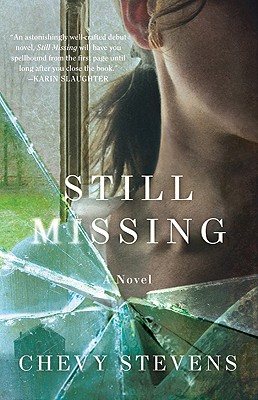
Still Missing

by Heather
You know when you pick up a book thinking that you want to read it, but something about it makes you keep pushing it to the bottom of the pile? That’s how I felt about Still Missing, a debut novel by Chevy Stevens. Centered around a kidnapping victim and detailing her capture, imprisonment, escape, and ongoing recovery, Still Missing promised to expose those dark horrifying elements that so often appeal to me, but for some reason (probably the thought of reading about something that is all too relevant in today’s times) I just couldn’t bring myself to delve into it. This is very unlike me. Usually, the darker the better, I mean who else raves about the beauty of Gillian Flynn’s prose as her character Camille cuts majestic, harsh, and haunting words into her own skin? Maybe there was something wrong with me, who knows, but a couple of months ago I finally got around to it and took it to bed with me. Not exactly the kind of book you snuggle up with, the imagery is apt to cause a distinct lack of sleep, but I did it anyway. And yes, I did lose sleep, but not for the reasons you think. The lack of sleep was directly related to the fact that I just did not want to stop reading.

Chevy Stevens manages to make a horrific subject matter digestible. Her character, Annie, shows a remarkable dark humor, which she uses to maneuver around a world that is no longer and might not ever be safe. While her captivity could be described in a visceral manner, it is not, rather she (Annie) is upfront with the reader (the book is written in first person as told to her psychiatrist) about her experience; her feelings after her abduction, how she survived mentally during it, and how she now stumbles through life, spending her nights sleeping in a closet in order to feel secure. She manages to convey a delightfully sarcastic, occasionally dark sense of humor that not only endears her to the reader, but also allows us to see how she managed to survive so long in such a horrendous situation, while maintaining most of her sanity. The true genius of this novel is that never was I so appalled that I had to put it down. The transitions between time periods are smooth, and although the acts of violence are described, never are they too detailed or too shocking. When dealing with this type of subject matter it is easy to get engrossed in the brutality, but Stevens manages to convey the acts, while not overwhelming the reader with the vicious details.

This was an engrossing read. It also possesses wit that engages, suspense that thrills, and a twist, which will rock readers. I highly recommend Still Missing to fans of Gillian Flynn, Chelsea Cain, and Lisa Unger, or for anyone who loves a good psychological thriller.

Tuesday, August 3, 2010

The Warwick's Questionnaire: Gary Shteyngart

The so-called Proust Questionnaire was originally a 19th-century parlor game designed to reveal bits of the soul, personality, & deep secrets of the participants through a series of pointed questions.  Marcel Proust was a big fan of the game and took the quiz several times during his lifetime - enthusiastically enough that the world has named the quiz after him.  Modern versions can be seen in the back pages of Vanity Fair (take the interactive quiz on vanityfair.com) and from James Lipton, host of Inside the Actor's Studio ("What is a sound you love?" etc.)  But nothing screams 19th-century parlor game like an independent bookstore in California, right?  So we've devised a ten question version of the Proust Questionnaire that we will be posing to the authors that visit the store.

Gary Shteyngart, author of the critically acclaimed novels The Russian Debutante's Handbook, Absurdistan, and the brand-new Super Sad True Love Story, was kind enough to be the very first participant in our debut version of the Warwick's Questionnaire - ten questions designed to reveal the dark reaches of an author's soul.  Or something like that.  Gary's answers mostly have to do with boiling water and Mark Twain. 

Gary Shteyngart, willing participant
1. What do you consider your greatest achievement?
  • Turning 38 without learning how to drive or boil water.
2. What is your greatest fear?
  • Dying in a car crash or being horribly burned by boiling water.
3. If you were a superhero, what would your power be?
  • The power to drive while using a tea kettle.
4. If you could bring one writer back from the dead, who would it be?
  • Mark Twain.  Duh.
5. What is your most treasured possession?
  • A Stalin-era copy of Tom Sawyer in Russian.
6. What do you dislike the most about your appearance?
  • The stuff below the neck.  The head's not great either.
7. What are you most looking forward to seeing on your tour stop in San Diego?
  • The Pacific Ocean. I've heard good things!
8. Was James Franco your prettiest student? (Actor Franco was one of Gary's students in the Creative Writing MFA program at Columbia University.)
  • Columbia is known for its hot student bod. He blended in nicely.
9. If dachshunds didn't exist, what would be your favorite dog? (Gary owns a longhaired wiener dog.  Not a euphemism.)
  • If dachshunds didn't exist I wouldn't want to live either.  Who would make me smile?
10. What is your motto?
  • "Can you please boil some tea for me and then drive me to the airport?"
Gary Shteyngart will be at Warwick's on Wednesday, August 11th at 7:30pm to discuss and sign his new novel, Super Sad True Love Story.  Check out the book trailer:

Tuesday, July 27, 2010

Are You Seth? vol.11

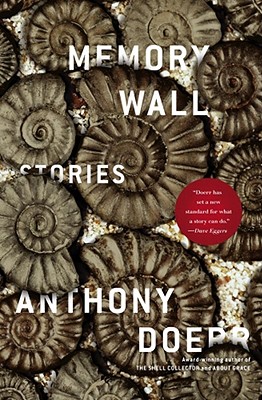
Today, in the 11th volume of AYS? I will be directing your attention to Anthony Doerr's new short story collection, Memory Wall.  I know, I know, nobody likes to read short stories anymore, but people, I'm here to tell you that you need to get over this phobia.  Short stories are the best way to discover new writers!  Where would we be without Chekhov, Poe, or O. Henry?  Most authors of quality start out writing short pieces before they can convince anyone to read their full-length novels.  Tobias Wolff, Jhumpa Lahiri, Robert Olen Butler, Ron Carlson, Alice Munro, Lorrie Moore, Wells Tower...embrace the short form!
"It's fair to say that Anthony Doerr is doing things with the short story that have rarely been attempted and seldom achieved."  -Dave Eggers
Doerr is also the author of one of my favorite novels from the past few years, About Grace.  (Still available for viewing on the Warwick's Bestsellers display.)  Sidebar: Grace is the story of one Henry Winkler who, throughout his life, experiences prescient dreams, usually of mundane, everyday occurrences that nevertheless come true every time.  Henry goes about his life, gets married, has a daughter, names her Grace.  One day, he has a dream that he is caught in a massive flood and has Grace swept from his arms by the torrent.  Naturally, this is a problem, as his dreams literally come true, so Henry decides that if he isn't around for the flood to sweep Grace away, it can never happen.  So he leaves his family behind in an attempt to save his daughter.  The rest of the book is about the circular path Henry's life takes, always trying to get back to his wife and child.  Heartbreaking, beautiful, great.

The title story from Memory Wall starts off with the Doerr's characteristic strength of prose and vivid descriptions of the natural world at large that instantly hooked me:
Seventy-four-year old Alma Konacheck lives in Vredehoek, a suburb above Cape Town: a place of warm rains, big-windowed lofts, and silent, predatory automobiles.  Behind her garden, Table Mountain rises huge, green, and corrugated; beyond her kitchen balcony, a thousand city lights wink and gutter behind sheets of fog like candleflames.
I always recommend reading the first page of anything you're interested in - if it grabs you right away, keep reading.  If not, move on.  Memory Wall is, as Mr. Doerr says "a collection of 4 stories, two novellas, all spiraling off the central idea of memory."  The two novellas - the bookends of the collection - are far and away the strongest of the bunch.  The title story is set in a sort of dystopian Cape Town, South Africa where the technology has been invented to retrieve memories from the brain and store them digitally for later re-visiting by the owners.  For example, Alma is an elderly woman who has the means to be able to afford such a luxury (it is almost prohibitively expensive) and as she is slowly succumbing to the ravages of memory loss and dementia, she can now access the memories of her life that she has lost.  Alma is vulnerable and dependant on others, and so open to the evil machinations of men.  When nefarious parties learn that Alma may have a memory stored away of a lucrative, secret event, she and her memories are exploited for financial gain and potential fame.  Is there enough of Alma still inside her own head to keep her memories safe?

The other novella, Afterworld, reminded me quite a bit of another contemporary of Doerr's, Kevin Brockmeier and his novel The Brief History of the Dead.  In Brockmeier's novel, when we die, we pass over to a massive city, where we wait, living rather normal lives, until there are no more people left on the planet with a first hand memory of us.  Doerr's story is similar in that Esther, raised in a German Jewish orphanage during WWII, is the sole survivor of the group of young girls who were living in the orphanage when all were sent to concentration camps  by the Nazis.  Now an elderly woman, she slips in and out of our world and the next, where her childhood friends await, ready to move to the next, final world.  For Esther, the memories flood her mind and she floats through the diaphanous, fragile barrier that exists between these multiple worlds, only to return to reality, as her corporal body is not yet ready to depart.  Sad, but a beautifully wrought & powerful story.

Among the other stories, Village 113 - about the building of China's Three Rivers Dam and the ancient community uprooted by its construction - won a prestigious O. Henry Prize in 2008 (his third win) and The River Nemunas - a young, orphaned girl moves from Kansas to Lithuania to live with her grandfather - just recently won a 2011 Pushcart Prize.  So, other people think these are pretty good too, just in case you didn't want to take my word for it.

Don't dismiss a book just because it is a collection of short stories - you may be missing out on a fantastic new author that could expand your reading horizons to levels you never thought possible.  Dip in, read one or two, put it down, read something else, loan it to your friend, come back to it later - they're not going anywhere.

Visit anthonydoerr.com for more - you can also read some of his stories as well as a few of his fantastic nonfiction essays.  (My favorite is "Butterflies on a Wheel" from 2008's Granta 102.)

Wednesday, July 14, 2010

The Arts & Culture Forum Roundup

On Friday, July 9th, Warwick's hosted a community Arts and Culture Forum to discuss the future of print media and critical journalism in San Diego.  The series of layoffs at the Union-Tribune in the last several weeks - especially that of Bob Pincus, long-time art critic and Books editor - proved to be the catalyst for the forum and prompted many concerned citizens to turn out to hear what the panel had to say on the subject.  Moderated by local author & psychologist, Dr. Richard Farson, the panel for the forum featured five prominent figures in the San Diego arts, culture, and book scene:  Jeff Light, editor of the San Diego Union-Tribune, Robert Pincus, former art critic and books editor at the U-T, Hugh Davies, director of the Museum of Contemporary Art San Diego, Sandra Dijkstra, founder & president of Dijkstra Literary Agency, and Angela Carone, Arts & Culture Producer at KPBS.  Each panel member was given the opportunity to address the following question posed by Dr. Farson:  What can we do, as a community, to ensure that the Arts, Culture, and Books are well represented in San Diego?

The issue seems to be twofold: one portion of the panel (and the audience) wants to see order restored, Bob Pincus returned to his desk at the U-T, and a continuation of fulltime arts coverage in the daily paper.  This sentiment was echoed by Sandy Dijkstra, Hugh Davies, and Bob Pincus especially.  Generally, this portion of the panel were strong proponents of print media maintaining a firm place in the community, rather than having more of a web-based critical presence.  Hugh Davies: "The prospect of having the anarchy of a blog determining what is great art and what is hype is very troublesome."  Angela Carone  (and, to some degree, Jeff Light) was more of the mind that online critical journalism needs to be embraced as a viable source of information.  "I think the future of arts journalism is online. The time for San Diego to strike is now."

Where do you stand, San Diego?  Is there a place for online arts criticism?  Or should we make every attempt to maintain the print media version?  As Sandy Dijkstra opined, San Diego is "either in or we're out" of the arts conversation.  Weigh in with your thoughts in the comments field of this post - we'd love to hear what you have to say.

The full video of the forum can be seen on the Warwick's Facebook page, in 20 minute installments.

For more info on the issue, check out some of the following resources:

Monday, July 12, 2010

Free Coffee! New Books! Discounts!

It's that time again - time for me to pressure you into skipping work for an hour or so on a Tuesday morning so you can listen to me talk!  Tomorrow - Tuesday, July 13th - at 10:00am, is the latest edition of Coffee with a Bookseller at Warwick's, where everyone who shows up will receive:
  • Free Coffee!
  • Free Scones from Brick & Bell Cafe!
  • A 20% Discount on All Books Discussed!
  • An Intimate Knowledge of the Newest and Best Books Available!
  • Personal Interaction with a LIVE Bookseller!
Join me for an odyssey of unparalleled dimensions as I take you down the rabbit hole to where this week's best books reside!  Anthony Doerr, James Lee Burke, Don Winslow, Alexander McCall Smith, Ayelet Waldman, and many more!  10:00am!  Tuesday!


UPDATE!  Best crowd ever for a Coffee with a Bookseller - thanks for coming out, everybody!  In case you missed it, here's the list of books I discussed (for the most part):
  • The Thousand Autumns of Jacob De Zoet by David Mitchell
  • Memory Wall by Anthony Doerr
  • The Glass Rainbow by James Lee Burke
  • Corduroy Mansions by Alexander McCall Smith
  • Rules of Betrayal by Christopher Reich
  • Faithful Place by Tana French
  • Savages by Don Winslow
  • Invisible by Paul Auster
  • Between the Assassinations by Aravind Adiga

Wednesday, July 7, 2010

Just a Little Summer Reading

This time of year, everyone seems to have a Summer Reads list - much like the Best of the Year lists that emerge in December.  Stephen King, writing for Entertainment Weekly, just announced his 6 Must-Reads For Summer (John Sandford, The Passage, Stieg Larsson...yawn); O Magazine has a huge list (including Aimee Bender, Brando Skyhorse, and Someone Knows My Name by Lawrence Hill); Time Magazine asked several writers for their picks, including Rebecca Skloot (Ted Conover's The Routes of Man - also one of my favorites), Charlaine Harris (61 Hours by Lee Child), and Alan Furst (Operation Mincemeat); NPR had a list from Indie booksellers as well.  You get the idea.  We here at Warwick's are entering the fray - here are the Summer Reads recommended by our booksellers - in brief:

Adriana:  "Told through alternating view points, The Heights by Peter Hedges (author of What's Eating Gilbert Grape) is in turns surprising, insightful, funny, and will have you guessing right until the very end."

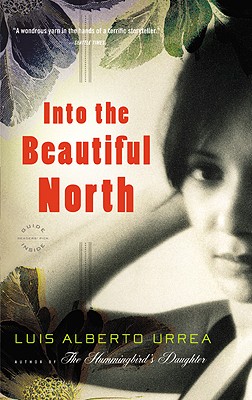
Janet:  "Into the Beautiful North by Luis Alberto Urrea - a funny, timely novel set partly in San Diego, with a with strong women characters and a loose Seven Samurai theme."

Jim:  "Island Beneath the Sea by Isabel Allende is a beautifully written historical novel about the Caribbean during the era of French Colonialism."

Heather:  "Juliet by Anne Fortier is the story of Julie Jacobs, a young woman who is drawn into the mysterious and very real world of Shakespeare’s infamous warring families. This was a fast-paced, intriguing story with complex characters, and a clever plot. A very engaging read." (Due out August 24th.)

James:  "Summer is a time for keeping things light and eating great food. Tarquin Hall's The Case of the Man Who Died Laughing is a curry flavored treat in the style of Alexander McCall Smith and Agatha Christie that will keep you hungering for more."

Rob:  "Brady Udall's The Lonely Polygamist is a funny and original novel about a guy with lots of wives and even more issues."

Joe:  Model Home by Eric Puchner - a novel about the California experience of boom & bust, both hilarious & heartbreaking at the same time. I was laughing, crying, then really crying.  Loved it.

Rhonda:  "Crazy For the Storm by Norman Ollestad. Ollestad was only 11 years old in 1979 when he, his father, his father’s girlfriend, and the pilot flying their small charter plane crashed into a California mountain during a blizzard. Only Norman survived. How did this young boy survive such a disaster?"

Margie:  "Furious Love by Sam Kashner and Nancy Schoenberger is one book you'll enjoy for sure.  Richard Burton and Elizabeth Taylor have long been a fascination for many of us - they had a volatile relationship, for sure, but the were always very protective of each other and their families.  It's wonderful to know just a little bit more about this fabulous couple."

Steven:  "Drinky Crow's Maakies Treasury (or any Maakies collection, actually) by Tony Millionaire is the perfect nautically-themed adventure to read while sipping on a pint of rum and relfecting on the miseries of another long, hot summer."

John:  "In K Blows Top: A Cold War Comic Interlude, Starring Nikita Khrushchev, America's Most Unlikely Tourist, Peter Carlson delivers a shocking, hilarious, and thoroughly entertaining account of Nikita Khrushchev’s 1959 trip across America. As funny as any novel I have ever read, this is a perfect beach read for any lover of history."

Seth:  "What else could I pick for Summer Reading but my favorite author's new novel?  David Mitchell's The Thousand Autumns of Jacob De Zoet is a majestic, sprawling historical epic of Japan and the encroaching West at the end of the 1700's.  Mitchell's brilliant prose sweeps you along with the flow, always keeping you wondering, as foreigner like Jacob, how much of the lush, inner world of Japan you will be allowed to glimpse."  See more in Are You Seth? vol 10.

Monday, July 5, 2010

Clandestine in La Jolla?

Maybe because of the holiday, this week is a bit light as far as new releases go, but here are a few worth noting - if you're so inclined.  Remember, last week brought the release of David Mitchell's The Thousand Autumns of Jacob De Zoet - my pick of the year!  Don't be the last one on your block!

Gotta have some Beach Reads:
It All Began in Monte Carlo by Elizabeth Adler - part of a series of summer, crime, romance novels. From the publisher blurb: "Sunny Alvarez and Mac Reilly always seem to find trouble in the south of France. This time, all the trouble began in Monte Carlo."  Nuff said.

The Island by Elin Hilderbrand - the author lives on Nantucket, so, presumably knows how to craft a good beach read.  In fact, Kirkus Reviews calls her the "Queen of the summer novel" and claims that The Island is so "deliciously addictive that it will be the 'It' beach book of the summer." 

The Cookbook Collector by Allegra Goodman - Publisher's Weekly: "If any contemporary author deserves to wear the mantel of Jane Austen, it's Goodman, whose subtle, astute social comedies perfectly capture the quirks of human nature. This dazzling novel is Austen updated for the dot-com era..."  Starred reviews from Kirkus, Library Journal, and PW - a pretty good pre-pub start.

A little Nonfiction:
Golden Gate: The Life and Times of America's Greatest Bridge by Kevin Starr - Starr, our state's preeminent historian, will be on KPBS's These Days on Thursday, July 8th if you want to hear him speak about the new book.  This slim volume is his history of the bridge over the Bay and how it has become the quintessential icon of California.

And a rediscovered classic:
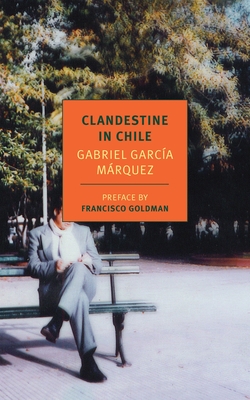
Clandestine in Chile by Gabriel Garcia Marquez - a handsome little paperback reissue by New York Review of Books of a title by the Nobel laureate that has been out of print for several years.  Garcia Marquez wrote this report back in 1985 about Chilean film director Miguel Littin's return to his homeland after 12 years in exile.  Littin was banned from returning by dictator Augusto Pinochet, but snuck into the country using a false passport and proceeded to make a documentary film about life in Pinochet's Chile.  Pinochet was not happy about this.  But, miraculously, Littin got away with it and gave Garcia Marquez a series of interviews on his experiences.

Coming up this week at the store:
  • Connie Mariano, former physician to presidents, discusses her memoir, The White House Doctor on Wednesday night at 7:30.
  • At the Beach Storytime for the kids!  Thursday at 11am.
  • Marlene Wagman-Geller, author of Eureka! The Surprising Stories Behind the Ideas That Shaped the World on Thursday evening at 7:30.
  • On Sunday we're having a 50th Anniversary Celebration of Harper Lee's To Kill a Mockingbird down at the La Jolla Library at 2:00pm.  Author Susan Vreeland will be there to lead the discussion and we will be having a screening of the film with Gregory Peck (or at least, a portion of the film.)  Bring the kids!
And, Friday night, join us for an important panel discussion about the future of the Arts in San Diego at 7:30pm. On the panel will be UT editor, Jeff Light, former UT art critic and books editor, Robert Pincus, literary agent, Sandra Dijkstra, director of the Contemporary Art Museum, Hugh Davis, and KPBS Arts & Culture producer, Angela Carone. 

Also, Alice Munro and Marcel Proust share a birthday this Saturday the 10th.  Would they celebrate together if given the opportunity?

And... follow along with my reading of James Patterson's latest novel (well, second latest now) on The Book Catapult.  I am in the midst of following through on my earlier threat to read one chapter of Patterson's The 9th Judgment every day - I call it 117 Days of James Patterson - and I'm currently somewhere around Day 67.  Check it out.

Wednesday, June 30, 2010

San Diego Community Arts & Culture Forum

With the recent restructuring of the San Diego Union Tribune under new editor Jeff Light’s leadership - especially the recent dismissal of veteran art critic and Books editor Robert Pincus - we are responding to mounting community concern about the future of arts and culture coverage in our newspaper by scheduling a community forum. Please join us at Warwick’s on Friday, July 9th at 7:30pm for a San Diego Community Arts and Culture Forum.

The discussion panel will be moderated by author Richard Farson and will include Jeff Light, editor of the Union Tribune, Bob Pincus, former art critic and editor of the UT Books section, Sandy Dijkstra of the Dijkstra Literary Agency, Hugh Davies, Director of the Museum of Contemporary Art San Diego, and Angela Carone, KPBS Arts and Culture Producer.

This forum is free and open to the public – we would encourage all who are concerned with the local media coverage of the arts to attend and add your voice to the discussion.

Support Bob Pincus at www.facebook.com/WeWantBob, at bringbobback.blogspot.com, and follow him on Twitter!

Friday, June 25, 2010

Are You Seth? vol.10

The Day has finally arrived - Tuesday, June 29th is the release day for David Mitchell's new novel, The Thousand Autumns of Jacob De Zoet.  Why is this important, you ask?  Besides the fact that Mitchell is my favorite author - a fact that you should be fully aware of - this is the best novel I have read yet so far this year. 

Mitchell is the author of four previous books, two of which (Number9dream and Cloud Atlas) were short-listed for the Booker Prize (his fourth, Black Swan Green, made the Longlist).  Born in England, he spent about a decade living in Japan (where he married his wife and started his family) before moving to Ireland in 2002.  He has been named one of the Granta's best young novelists and Time magazine picked him as the lone literary novelist on their 2007 list of the 100 most influential people in the world.  Whadda-ya think of that?  Where've you been?  Cloud Atlas has long been one of my favorite books - it has resided comfortably on the bestseller display at Warwick's since its release in August 2004.  Granted, that's mostly because I won't allow it to be removed, but still, we've sold almost 500 copies in that timespan.  And where Cloud Atlas is a complex, multi-layered force of nature - featuring 6 different storylines that intertwine and merge into one conhesive portrait of humanity - Thousand Autumns is rather straightforward in its narration and scope.

It is set in 1799 on the manmade, Dutch trading post island of Dejima off the coast of Nagasaki, Japan. Incredibly, Dejima was a very real place - in the 16th & 17th centuries, foreign traders were not allowed to set foot onto the actual mainland of Japan and were relegated to life on this fabricated island.  Jacob de Zoet is a clerk for the Dutch East India Company assigned to Dejima who just wants to do an honest job, make a little money, and work his way back home to his future bride. If only life in a David Mitchell novel were that simple.

The Dutch survive as Japan's sole trading partner through an uneasy alliance based on the certainty of supplies from the outside world - what happens when something goes wrong on the supply chain?  Jacob is faced with internal corruption and vicious political manuevering, the delicate balancing act of the Japanese partnership, a daunting language barrier, the mysterious banishment of the woman he loves, the hushed-up financial collapse of his employer, and an imminent attack by foreign invaders, all of which test the limits of his faith - a faith strictly forbidden in Japan on the cusp of the 19th century. There are multiple narrators throughout, as is Mitchell's wont, but it is structurally done in such a subtle way that you hardly notice - you are just swept along in the flow, wondering, as a foreigner like Jacob, how much of the lush, inner world of Japan you will be allowed to glimpse.

This is really fantastic, fully-rendered historical fiction - if that's your bag, check this out for sure.  If you're a David Mitchell fan, there should be no question of which book you purchase from your local, friendly independent bookstore on Tuesday.  For more on Mitchell, check out his interview in the current edition of The Paris Review (there's an excerpt available on their website.)  Or for even more, come to Warwick's and Steven and I'll tell you all about him.

Wednesday, June 9, 2010

The Short Life of Bree Tanner

by Heather

Another book by Stephenie Meyer. You would think that crowds of Twihards would be rushing to the store to pick up the latest from the reigning queen of vampires, but sadly this is not the case. Now, while I don’t want to classify myself as a Twihard (way too obsessive for me) I am a fan of the Twilight saga, I've sat through the two disappointing films, and am one of the few who has actually purchased this new Eclipse-based novella. Why aren’t these books selling? Well, it could be that it is a mere 192 pages, and anyone who has read the series knows the ending. Actually, even if you haven’t read the series you know the ending, gasp…Bree dies. Don’t get mad at me if you haven’t figured that out yet, I mean hello, it’s in the title. Really, it’s most likely because the author has posted the book for free at breetanner.com.  Now don’t get too excited, the book is only available online until July 5th, you can’t download it, and you cannot print it. That’s nice, but not exactly what I as a Twilight saga fan want to hear and certainly not what I want to hear as a representative of an independent bookstore. No, I want a copy for my library. You know, to complete my shelf of Stephenie Meyer. You can’t do that with a digital version that you can’t even save to disk. So why aren’t fans picking up on this?

For starters The Short Second Life of Bree Tanner is such a small piece of the Twilight puzzle that setting it up on its own doesn’t really work. It would have been much better to include it in some compendium or a large and extravagant Twilight encyclopedia. This would give it more meat and put the story within the context of the series. Instead, this story seems to have arrived from nowhere and is quickly floating off into the distant world of “who cares” and “why bother”.

This is unfortunate because the story is interesting, providing a whole new way to see the characters of Twilight. While it’s a quick and easy read, it provided a little bit of new insight to what was actually my least favorite books of the series and it got me a bit more excited for the movie (yes, even though the first two films were abysmal, I will go see Eclipse, let’s hope the third time is the charm). I thought I was done with the series, but Bree Tanner reminded me why I enjoyed it in the first place. Now, whenever it is that I decide to reread the series (and I will) I am happy to have this little nugget on the shelf adding to my reading enjoyment. And if you just read it for free online you miss that.

Just a note, one dollar from each book purchased goes to The Red Cross, so not only are you expanded your Twilight palette and supporting your local bookstore, but you're also contributing to a worthy organization.

Friday, June 4, 2010

Here's the Truth:

We've actually been so busy shelving new books at the store in recent weeks that I haven't been able to post anything to the blog about those new books.  With an impending Coffee with a Bookseller coming this Tuesday (be there or be square), I figured now's a good time to offer a recap of recent weeks and to take a look at the new stuff coming this week:

Recent new hardcovers:
Blockade Billy by Stephen King
Truth by Peter Temple (a book I loved - follow the link for my recommends)
Hitch 22: A Memoir by Christopher Hitchens
61 Hours by Lee Child
Steve Martini's The Rule of Nine
The Madonnas of Echo Park by debut novelist Brando Skyhorse (who will be at Warwick's on June 14th to discuss)
and The Anthropology of an American Girl by Hilary Thayer Hamann, which has been a buzz book for years, as the author originally self-published before getting picked up by Spiegel & Grau.

And of course, The Girl Who Kicked the Hornet's Nest by Stieg Larsson arrived May 25th. Where've you been? This is by far the hottest title of the year - the conclusion to the late-Larsson's internationally bestselling trilogy of mystery novels. There's a Swedish movie version (with subtitles) of the first book and a rumored upcoming American version, directed by David Fincher and starring Carey Mulligan (of Twilight fame) and Viggo Mortenson. Like I said, where've you been?

There has also been a riduculous abundance of new paperbacks arriving in the last few weeks - Half the Sky by Nicholas Kristoff and Sheryl WuDunn (highly, highly recommended by John) and three that I heartilly recommend:  Iain Pears' Stone's Fall (A challenging, unfolding onion of a novel and a fascinating, meticulously researched, multi-layered masterpiece by the author of An Instance of the Fingerpost), Between the Assassinations by Aravind Adiga (click for my recommends), and Carlos Ruiz Zafon's The Angel's Game - here's my take: "This much-anticipated follow up to The Shadow of the Wind is a sprawling, labyrinthine novel that evokes the rich, vivid atmosphere of pre-Civil War Barcelona’s culture of literacy (leaving the modern reader pining for such days) yet cleverly provokes the reader with a narrator of dubious reliability & sanity. The clack of the typewriter, the smell of the dusty old bookshop, the very idea of pulp short stories being printed in the newspaper - all are evocative of a lost era of literature and a culture surrounding the printed page. The vastness of the narrative layering is astounding, showcasing Ruiz Zafon’s remarkable storytelling abilities & inherent sense of time & place. A great escapist read, especially for those looking to re-enter the Cemetery of Forgotten Books…."

This week:
  • The "Twilight" mention reminds me, there's a Stephenie Meyer novella set in the Twilight universe due out this Saturday. The Short Second Life of Bree Tanner is a result of Meyer fleshing out one of her minor characters from the other books.  If you're into the whole Twilight thing, there's nothing new I can tell you, as you know all this (and more) already.
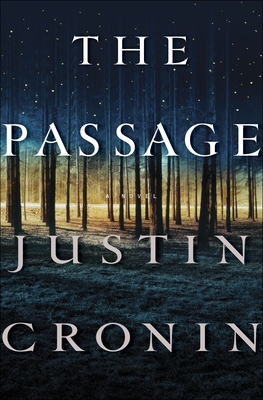
  • The Passage by Justin Cronin - this is going to be a HUGE book, I guarantee. (*Guarantee not valid in California.)  Ballantine won the publishing rights with a $3.75 million contract to the author, it's 766 pages long and weighs 2.4 pounds, Ridley Scott bought the film rights for $1.75 million, and it's about vampires!  Even more incredible (at least to me) is that Cronin is a product of the prestigious literary factory, the Iowa Writer's Workshop.  Take that, Stephenie Meyer.  Here's the New York Times piece on the hypeAnd the Huffington Post's take.
  • Medium Raw by Anthony Bourdain - the long-anticipated follow-up to Kitchen Confidential, the book that put Tony on the map.  If you watch No Reservations, it's gotta be good - I can't wait to read it.
  • The Lion by Nelson DeMille - always a bestseller, this is the sequel to The Lion's Game.
And, we are just two short weeks away from the release of David Mitchell's new novel, The Thousand Autumns of Jacob De Zoet. (Due Tuesday, June 29th.)  My favorite book of the year so far - here is my early take, just after I read the manuscript 6 months ago. Ahh, the perks of bookselling!

Friday, May 21, 2010

Matterhorn

The "It" book this Spring, at least in these parts, seems to be Karl Marlantes' debut novel of the Vietnam War, Matterhorn. (Warwick's had him here in April, to great success.) Matterhorn highlights the utter futility, stupidity, and frustration that permeates war in our time. It is the story of a company of Marines, entrenched in the jungle of Vietnam, forced to protect, defend, abandon, attack, and hold a supposedly strategically significant mountain that rises above the treeline just south of the DMZ. These men fight, kill, and often die, at the whim of an alcoholic, glory-seeking Battalion Commander who watches and criticizes from afar. It is raw, yet elegant - powerful, yet humble; a remarkable book that forces a fresh perspective on a sad chapter in American history.

Marlantes himself was an enormously decorated Marine during the war, earning two Purple Hearts, the Bronze Star, two Navy Commendation Medals for Valor, ten air medals, and the distinguished Navy Cross. In 1975, when he had finally come home after his time served, he began writing his novel - 35 years later, we have the honor of being able to read his story. The publishing history of Matterhorn is almost as interesting as the story itself - it is one of an amazing collaborative effort by a tiny independent publisher, a major New York publisher, a giant bookstore chain, and dozens of independent bookshops.

After toiling over his book - which ballooned to over 1,700 manuscript pages at one point - for the better part of three decades, Marlantes finally found a publisher in tiny El León Literary Arts out of Berkeley, CA.  He had no literary agent and was paid in copies of his book, rather than cash - 120 to be exact.  El León printed a modest 1200 copies and Marlantes sent some around to independent stores that he thought might want to carry it. Several booksellers read it and expressed interest in book signings - the Oregonian even ran an article on Marlantes and his story, even before the original publication date. El León also submitted the work to various literary contests with the hope that someone else would notice its merits. They did.

When the Barnes & Noble's Discover Great New Writers program expressed interest - Sessalee Hensley, renowned book buyer for B&N was a big proponent - the concern was whether El León could handle a print run larger than the initial 1200 if picked up by the program. Hensley brought the book to the attention of Morgan Entrekin, president of the widely respected Grove/Atlantic and Entrekin struck a deal with El León to publish and distribute jointly. Grove paid El León for the initial print run, covered all their printing costs, plus a cut of the ensuing profits, and printed Matterhorn under both names - an unprecedented circumstance in the world of publishing. Now, two months after the Grove publication date, Matterhorn has received all kinds of remarkable praise, from virtually ever major review publication out there. It has spent 7 weeks on the New York Times bestseller list, it received coveted starred reviews from Publishers Weekly and Library Journal, it was featured on NPR, in Newsweek, The Onion, the Washington Post - the list goes on. Plenty of people in the Warwick's orbit have read it as well - so many, in fact, that I thought I'd ask some colleagues and friends to give me their impressions on Matterhorn for inclusion in this post, as sort of a collaborative affair - they're included below.

As for me, I was born in 1975 - a month and a half after Saigon fell - so there's always been a bit of a mystique surrounding Vietnam for me, as one brought into life just as so many were exiting theirs. It has been a war that has left its indelible stamp on my generation - even though we were just barely getting started. I haven't read a novel of Vietnam that has brought the stark reality of the war to the forefront quite like this one. What struck me most about Matterhorn - other than the frustration in watching men die as a result of astounding idiocy and political posturing - was that I never found myself thinking of characters as being "killed off" by the author, rather I mourned their deaths as if they were real people. I can't remember ever thinking this while reading fiction before.
Wes Anson:  "For me it was as accurate and as evocative as Band of Brothers must have been for WWII people. Having been in Vietnam during that time (and in that location), I can tell you that every word Marlantes has written and the scenes he describes are absolutely accurate. If you’ve ever wondered what it was like to actually be there, you need to read this book. It deserves every word of praise that it has received."
Photo by Henri Huet, AP
Adrian Newell, Warwick's:  "I loved the book, but found it hard to read because of the subject matter, not the writing - so I read it only in the morning and in small bites. I both loved and hated the way I became so emotionally attached to characters...only to have them die! It was very realistic but tough to handle as the reader becomes very connected to the people. I thought he did an amazing job of describing the tedium of waiting for battle, the psychological impact of war, the camaraderie and brotherhood that develops under the harsh conditions of combat, and the political machinations that are often at cross purposes with what we're fighting for & about. War is ultimately the game of politics taken to the nth degree!"
Will Wainess: "I think Matterhorn did an exceptional job of describing the racial tensions that existed within these companies during the war. My father - in World War II - was in charge of a segregated unit. His officers were white but all of his enlisted men were black. And then you throw all of these (different) people together in this horrendous conflict called Vietnam…I mean, I’d never known that “the brothers” wore hangman’s nooses around their necks, in defiance…throwing it up into the face of the officers on a daily basis. There were no black officers, really. What really jumped out at me was how career-oriented & gung ho for promotion and glory a lot of these white officers were. Some of (their) decisions were clearly stupid, and some of them were very necessary, but (it proves) that there’s no faster way to get promoted than during wartime. These guys were jumping at their chance during this conflict – always thinking of who to lay it off on, how it may come back at them or how it might stand in their favor & get them promoted. It really addressed the pure madness of it all - take the mountain top, abandon the mountaintop, march here by 9:30 in the morning, without food and resupply - not just because the weather (is bad), but 'cause (we're) not gonna reward them for (screwing) up and not taking better care of their soldiers feet and eating their food too fast...it was nuts! I really got the sense of the futility of war as I have in few other books."
Molly McDonald:  "Vietnam is kind of a nightmare to think about, and therefore I’ve not wanted to do so for many years. I began reading Matterhorn thinking I wouldn't last a chapter and found myself not able to put it down. Marlantes takes you there without mercy, not unlike how our troops arrived: young, inexperienced, and aching to understand what the hell was going on in this, not a war, but a military conflict. I was asking myself throughout the book: "Why do we do war?" The answers are in this novel. The characters are stunning, vivid, and wonderful. I learned what goes on between soldiers in combat, but also of larger issues of self, purpose, and the limits of human understanding. The healing quality of this is not to be underestimated - I have not enjoyed a novel so much in quite awhile."
John Hughes, Warwick's:  "What makes a great war novel? For me, the answer has to be a compelling story that not only gives me a realistic portrayal of a war but also gives the reader an experience of the war from inside the minds and hearts of actual soldiers. A great war novel should strike you to the core. Matterhorn is a great war novel about a horrible war. It has earned a place on my bookshelf next to Red Badge of Courage, All Quiet on the Western Front, and The Naked and the Dead."
Ted Chandler:  "Intense, raw, and compelling, Matterhorn accurately portrays, more than any other novel that I've read, 'the horror, the horror' of this brutish, foolish, and disastrous American misadventure. I can say this with conviction because of my own experiences in various 'garden spots,' such as Dong Ha, Quang Tri, and Khe Sanh two years before Mellas' combat tour in I Corps. But that said, Semper Fi Marines!"

Tuesday, May 11, 2010

Do You Have That Book...

...with the big wave of money on the cover?  C'mon, you know the one one I mean.

Thursday, April 29, 2010

Anchee Min, Pearl of China. A Streaming Audio Odyssey

Anchee Min stopped by the store April 8th, 2010 to chat with her legion of local fans and to sign copies of her new novel, Pearl of China. If you've never seen Anchee Min, you're missing out. Her appearances at Warwick's are legendary, whether she is reading from her work, singing opera, teaching the crowd to dance, or relating her moving personal narrative.

At Warwick's we've always wanted to find a way to bring our events to everyone, even if they can't make it to the store. Our latest experiment is to provide you with a streaming audio archive of our past events. If you click the link below Windows Media Player will open the audio from Anchee Min's book signing.
Listen Now To Anchee Min Discussing Her New Novel Pearl of China From April 8th, 2010

Since we've never done this before we're not sure how valuable it is to you, so please let us know what you think. We can also post the files as Real Media streams in the future and soon we will have a site ready for podcasting. Don't forget, you can also watch video of many of our events over at our channel at YouTube and in higher quality as single files at our new video archive on Fora.tv.  Again, let us know what you want to see and how you want it delivered!

Sunday, April 25, 2010

Are You Seth? vol.9 or What's New This Week?

It's been a couple of weeks since I last posted a round-up of the new releases for the week - and even longer since I posted anything resembling a book recommendation, so I thought, since most of this week's releases (especially the paperback ones) are so decidedly "Seth-friendly", I'd offer a combo deal.  By the way, if you like reading about the new books here on the blog, let me know: either in the comments field, at info@warwicks.com or just by coming by on the second Tuesday of every month for Coffee with a Bookseller and telling me in person. (Or any day, for that matter.)
  • The 9th Judgment by James Patterson - being the cynical, snobbish jerk that I am, I've been considering a James Patterson-related personal challenge to myself for several months now & I think the time is ripe. Depending on the number of chapters - I assume this will have at least 100 - I will be undertaking somewhere in the neighborhood of 100 Days of James Patterson, during which I will read one chapter a day & post my thoughts on the daily reading to my blog, The Book Catapult. I might chicken out, but for now, I'm doin' it! It's gonna be hilarious. By the way, in between writing or co-writing 5-9 novels each year (last Fall he signed a 17 book, 3 year deal with Hachette), Patterson also watches a lot of movies: check it out.
  • Island Beneath the Sea by Isabel Allende - always a major publication, a huge bestseller, and destined to be a favorite of Jim S. from Warwick's. Here's a summary from isabellallende.com: Isabel Allende’s triumphant return to historical fiction tells the story of Zarité, a nine-year-old mulatto girl who is sold as a slave in eighteenth-century Santo Domingo. This sweeping novel follows her and other slaves over forty years, telling the story of their exploitation and the miserable conditions of their lives. Adding depth and color to the story are the women who help Zarité survive: Violette, the prostitute; Loula, the businesswoman; the witch Tante Rose; and the plantation cook, Tante Matilde. In Zarité, Isabel Allende has created another of her unforgettable characters: a fighter, a heroine, a woman who will prevail regardless of what the future might hold.
  • Ilustrado by Miguel Syjuco - before this debut was even published, it was awarded the 2008 Man Asian Literary Prize (the judging panel called it "brilliantly conceived, and stylishly executed" written with "seemingly effortless skill.") and the Grand Prize at the Palanca Awards, the highest literature prize in the Phillipines. C'mon, that's pretty impressive. "It begins with a body. On a clear day in winter, the battered corpse of Crispin Salvador is pulled from the Hudson River - taken from the world is the controversial lion of Philippine literature. Gone, too, is the only manuscript of his final book, a work meant to rescue him from obscurity by exposing the crimes of the Filipino ruling families. Miguel, his student and only remaining friend, sets out for Manila to investigate. To understand the death, Miguel scours the life, piecing together Salvador’s story through his poetry, interviews, novels, polemics, and memoirs. The result is a rich and dramatic family saga of four generations, tracing 150 years of Philippine history forged under the Spanish, the Americans, and the Filipinos themselves. Finally, we are surprised to learn that this story belongs to young Miguel as much as to his lost mentor, and we are treated to an unhindered view of a society caught between reckless decay and hopeful progress." I, for one, can't wait to read this.

    New Paperbacks:
  • Zulu by Caryl Ferey - the latest crime novel release from the wonderful Europa Editions. A violent, shocking account of crime in modern South Africa - which is not the happy place we may think it has become in the last decade. From my Book Catapult take: "I think what disturbed me so much was that the violence never felt gratuitous in any way - it just felt real, which is a lot scarier. You learn about halfway through that this is one of those books where no character is safe - just like it would be if this were a true story. Once the gang that (detectives) Ali & Co. are chasing realizes that cops are, in fact, touchable, the whole game is turned on it's head and you really never know what will be lurking in the next set of shadows."
  • The Selected Works of T.S. Spivet by Reif Larsen - one of my favorite books from last year, now out in paperback. I'm going to plug my other blog again, where I've written about Spivet on several occasions, so forgive me: #2 on the 2009 Catapult Notable List. If you're ever wondering what sort of book is infinitely better in a bound-book format (rather than an e-book one), T.S. Spivet is the perfect example. A masterfully illustrated novel of a wandering genius boy that is unlike anything you have ever read, I guarantee it.
  • Sanctuary by Ken Bruen - I'm a huge Bruen fan, as most Warwick's regulars know, and while I did really like the story to this, the seventh Jack Taylor novel, I was extremely miffed at the large-type, double-spaced, 202-page, $25 hardcover edition that came out last spring. I feel a little better about it as a $13.99 paperback. If you like crime novels and have not read this series, come talk to me.
  • The City and the City by China Mieville - #6 on the 2009 Catapult Notable List. (Like I said, a very "Seth-friendly" week of releases.) The LA Times called this "a Philip K. Dick and Raymond Chandler love child...raised by Franz Kafka." Here's my "Warwick's Recommends":  "In a style similar to Philip K. Dick or Jonathan Lethem’s Gun, with Occasional Music, Mieville expertly blurs genre lines in this science fiction crime novel of a bizarrely divided city. The city is one physical space, but partitioned by an otherworldly division – they merge & blend, but the residents always stay separate, avoiding eye contact, out of a collective fear of the spooky Breach, the overseers of this crazy sociological experiment. But what happens when a woman is murdered in one city, but her body is discovered in the other? There is not much negotiating with Breach, so the politics for Inspector Tyador Borlu are complicated, to say the least. A crazy cool novel."
Don't forget, Coffee with a Bookseller (aka: Coffee with Seth) is on the 2nd Tuesday of every month at 10:00am. (Next one is May 11th)  Free coffee, free scones from Brick & Bell, and free book advice! ***Starting with the May edition, anyone in attendance will receive a 20% discount on any of the books I talk about - only good on that day. Pretty sweet!***

Wednesday, April 21, 2010

Tana French's Dublin

by Heather -
Hordes of people, Guinness, millions of cabs, a university where the tour guides are plucky intellectuals with a keen, if somewhat hokey sense of humor, Guinness, and music, oh, so much music (though predominantly Johnny Cash), so much that you can feel the vibrations from the Temple Bar as you stumble by; this is how I remember Dublin. Did I mention Guinness?

Dark corners, edgy women peering out slyly from behind their shutters, closed doors hiding the thinly veiled secrets of the inhabitants. Man against man, families against themselves, cop against everyone. Streets empty with the vastness of failure, and dysfunction that seeps and crawls its way between homes and through the lips of anyone who speaks. This is the image of Dublin that Tana French creates.

French, the author of In the Woods (winner of the 2008 Edgar Award for Best First Novel by an American Author), will be releasing her third book revolving around the members of the Dublin Murder Squad in July. French is an amazingly talented writer with the unique aptitude of producing intense character studies within well-plotted, emotionally moving novels of psychological suspense. As readers wait for the July 13th release of Faithful Place, I feel it necessary to bring her talent for writing to the attention of those who have not yet had the fortune of delving into her murky world.

In the Woods is the first of the novels detailing the emotionally wrecking and highly personal cases of Dublin’s finest. It brings to mind the blurred lines and gray areas of right and wrong that pepper the works of notable authors like Dennis Lehane. Following Detectives Rob Ryan and Cassie Maddox as they delve into the murder of a 12-year-old girl, a case eerily similar to events from Ryan’s shadowed past, In the Woods is a thrilling mystery that absolutely sucks you into its depths. The Likeness takes place six months later and details the psychological fallout and resulting career challenges of Detective Cassie Maddox. My favorite of the two, The Likeness is gripping in its intensity as the readers follow Cassie into an undercover assignment that’s cult-like atmosphere begins to deconstruct Cassie’s thinly veiled mental composure. Both are written with beautiful, often-poetic prose interposed with a jagged, seeping edge of violence that slices through the texts brilliantly.

So, Faithful Place, does it live up to these two bestselling thrillers? Yes! By far the most complex, as it deals with the murky and constantly unstable world or families, Faithful Place follows Detective Frank Mackey, leader of Dublin’s undercover unit, as he investigates a decades old murder that had long-lasting repercussions for both Frank and his family. True to form (as presented by French), Mackey lives on the edge of right and wrong, leaping through various shades of gray as he stealthily moves through the Dublin slums picking apart all of the inhabitants in his search, even if the answers lead him closer to the damaged home and family he escaped twenty years before. According to many of my co-workers, this is it, French’s best work to date and I have to agree, she just keeps getting better.

Now, if you haven’t done so yet, read In the Woods and The Likeness. You have time - until July to be exact. Then, once you’ve reveled in the complex world of Tana French for a while you will be fully prepared for the brilliance that is Faithful Place.

Monday, April 12, 2010

2010 Pulitzer Prizes

At noon today, the Pulitzer Prize Committee announced their 2010 winners and finalists:

Fiction: Tinkers by Paul Harding
History: Lords of Finance: The Bankers Who Broke the World by Liaquat Ahamed
Biography/Autobiography: The First Tycoon: The Epic Life of Cornelius Vanderbilt by T.J. Stiles (also the winner of the National Book Award for Nonfiction)
General Nonfiction: The Dead Hand: The Untold Story of the Cold War Arms Race and Its Dangerous Legacy by David E. Hoffman
Drama: Next to Normal, music by Tom Kitt, book and lyrics by Brian Yorkey
Poetry: Versed by Rae Armantrout

I, for one, have never heard of Paul Harding, nor his (debut!) novel, Tinkers, although it is pretty cool that a small, independent, non-profit press like Bellevue Literary has produced such a prestigious award-winner. It beat out National Book Award finalist, In Other Rooms, Other Wonders by Daniyal Mueenuddin (read & recommended by John. I've read 1/2 of it.) and another book I've never heard of, Love in Infant Monkeys by Lydia Millet. (I would've picked the latter, simply on title alone.)  The Tinkers synopsis from the Pulitzer site: "An old man lies dying. As time collapses into memory, he travels deep into his past where he is reunited with his father and relives the wonder and pain of his impoverished New England youth. At once heartbreaking and life affirming, Tinkers is an elegiac meditation on love, loss, and the fierce beauty of nature.Order your copy now on warwicks.com - it may take awhile, but we will have some.

The best part of this year's awards, however, is in the poetry department - given to Rae Armantrout, writing professor at UCSD, for her collection, Versed. Much congratulations!  From the Pulitzer site: Rae Armantrout has always organized her collections of poetry as though they were works in themselves. Versed brings two of these sequences together, offering readers an expanded view of the arc of her writing. The poems in the first section, Versed, play with vice and versa, the perversity of human consciousness. They flirt with error and delusion, skating on a thin ice that inevitably cracks: “Metaphor forms / a crust / beneath which / the crevasse of each experience.”  Dark Matter, the second section, alludes to more than the unseen substance thought to make up the majority of mass in the universe. The invisible and unknowable are confronted directly as Armantrout's experience with cancer marks these poems with a new austerity, shot through with her signature wit and stark unsentimental thinking. Together, the poems of Versed part us from our assumptions about reality, revealing the gaps and fissures in our emotional and linguistic constructs, showing us ourselves where we are most exposed.

For more on all the winners, check out Pulitzer.org.