Showing posts with label Seth Recommends. Show all posts

Tuesday, May 17, 2011

Are You Seth? vol.13 (Rainy Day Noir Edition)

Since it's such a rare rainy day in May here in San Diego (usually we just have the May Gray mornings without the water coming down) I thought I'd recommend a handful of good, new rainy-day noir books to read.

First of all, you should definitely be checking out the brand new San Diego Noir collection from Akashic Books, edited by Mysterious Galaxy's own Maryelizabeth Hart. This latest in the series of city-oriented noir fiction features stories by SoCal greats T. Jefferson Parker, Don Winslow, and Debra Ginsberg - and even better, you can meet Jeff, Don, & Debra, along with fellow contributors Gabe Barillas and Cameron Pierce Hughes on Wednesday night this week, the 18th of May at 7:30, right here at Warwick's. While, yes, this bit reads like a plug for our event, this is the perfect rainy read, don't you think? Visions of the seedy underbelly of America's Finest City go well with heavy cloud cover and misting Southern California rains, I think. Come to the event, as it's sure to be an interesting "discussion" with these five.

Elsewhere, there's the latest novel from Philip Kerr, Field Gray - the latest in a series of 1940's crime noir that I've been championing for years. Kerr originally wrote three novels about Bernhard Gunther in the early 1990's (now collectively known as Berlin Noir) which chronicled the detective's life as a pre-WWII Berlin hotel detective and just after the war as a private-eye of sorts. Bernie is a throwback to the Raymond Chandler, Dashiell Hammett type of protagonist - a surly, smart, sharp-tongued, ladies man, he smokes & drinks his way among both the bottom dwellers and the upper crust of Berlin society as he attempts to right the wrongs of the world he lives in. This is no small task in Nazi Germany, of course, and his path has taken him into the belly of the beast in books past, leading him to exile in South America. Just as Field Gray begins, Bernie is picked up in a boat off the coast of Cuba in 1954 by American operatives, who proceed to try and get him to fill in some intelligence gaps to avoid being tried for war crimes. Bernie's recollections fill in a lot of the gaps left open by the previous six books, bringing his story full circle back to Berlin 1933, his reluctant donning of the field gray uniform of the SS in 1941, and life in a Russian gulag after Stalingrad in 1945. Of course, Bernie doesn't like to cooperate with any government or their operatives, so he's always working his mouth toward an exit strategy. The best part is that you don't have to have read the previous books, as this stands alone as a brilliant crime noir, much like Alan Furst, if that's your thing.

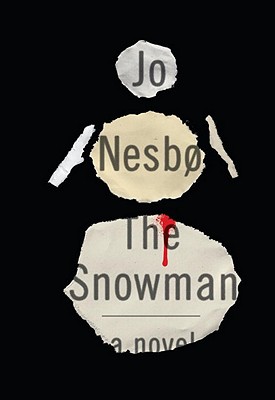
Since Scandinavian crime novels seem to be the genre du jour these days, I'm hoping you've at least heard of Jo Nesbo from Norway, but I'm guessing not. (You may have seen the Vanity Fair bit on him in April.) Personally, after having read all of Henning Mankell and enough of Stieg Larrson, I can unequivocally state that Nesbo is a far, far better writer than they. His previous three novels to be translated for the American market - The Redbreast, Nemesis, and The Devil's Star - have featured Oslo detective Harry Hole (I'm told that his last name is pronounced "hoo-luh," thankfully) a hard-drinking, Doc-Maarten-wearing, chain-smoking hardass. I loved the previous three books - involving Norway's dark secrets from WWII (Redbreast), a less-than-reliable narrator/murder suspect in Harry (Nemesis), and an underlying thread of violence and mistrust at the hands of one of Harry's fellow detectives which runs through all three. The Snowman, the latest translation to hit our shores, is actually the 7th book in the series, as Nesbo recently switched American publishers, thus skipping the 6th book, at least for the time being. While readers of the previous books may be annoyed by some finer plot points as this one gets going, The Snowman is actually a great starting point for new readers as it remains unattached to the previous books. This centers not so much on Harry's life outside his world of detecting, at least as much as it doesn't intersect with the crimes he's investigating. There appears to be a serial killer at work in Oslo, pretty much a historical impossibility - Norway has never had a documented serial killer. Someone seems to be brutally murdering women around town, leaving a creepy signature snowman nearby each time. Harry thinks the crimes are related, of course, but he has a hard time connecting the dots as the killer stays several steps ahead of him the whole time. The relentless Norwegian press wants answers, putting tremendous pressure on Harry to find the killer, which leads to a huge political mess and even more murdering. I read a lot of crime fiction, as you can tell, and the climactic sequence in this one had even jaded ol' me on the proverbial "edge of my seat," as they say. Good, dark fun.

Wednesday, March 16, 2011

Are You Seth? vol.12

Alright, so it's been awhile since I posted a review of any kind on the Warwick's blog - in fact, the last volume of "Are You Seth?" was posted in July 2010 and was for Anthony Doerr's Memory Wall. I mention this because Doerr just recently won the 2011 Story Prize for that very same collection - clearly I was on to something! So, in an effort to breathe new life into the blog - which we think could really use a better name & are open to suggestions - here are 2 new books that I think you should read.

Wait, no, you HAVE to read these.

We, the Drowned by Carsten Jensen
First of all, feast your eyes on that beautiful jacket art. (Illustrated by Joe McLaren, jacket design by Susanne Dean, published by Houghton Mifflin Harcourt.) If this isn't reason enough to keep books in a physical format, I don't know what is. (The artwork is definitely the reason I picked this up in the first place.) I really have nothing against eBooks, but this is the sort of thing we lose when we go all-digital. I'm just sayin'.

Even better, it's a gorgeous novel on the inside as well. Originally published in Danish in 2006, it won the highest literary prize in Denmark and was picked as the best Danish novel of the last 25 years by the readers of the country's largest newspaper. Spanning the years & generations from 1848 to 1945, We follows the sailors of Marstal - a tiny island town & the center of Danish seafaring pride - as they travel the oceans of the world - from Samoa to Newfoundland, Australia to London, Casablanca to Dakar, Murmansk to Greenland, and back home to Marstal. Always back to Marstal, where the women wait, worry, and grieve.

Through the years, as Marstal's place in the world evolves, a different narrator escorts us across the globe and back to Denmark again. As each narrative voice moves on, another from their life picks up the tale & makes it their own. When on dry land, the people of Marstal tell the story in a collective “we” – a narrative device that Jensen wields with majestic clarity & grace. Funny & poignant, heartwarming & powerful, yet dark & foreboding in a way that only the events of our own world can actually be. After 674 pages, I was still blown away by the final, heart-rending page. One of the best books I've ever read.

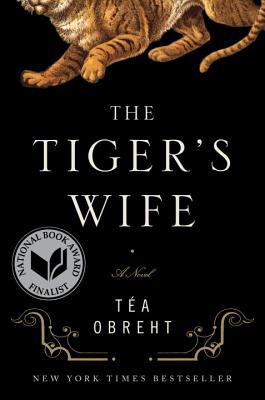
The Tiger's Wife by Téa Obreht
This is already turning into the hot book of the year, so forgive me if you've already heard about it. (Seriously, it's huge right now - Random House has already gone back to press at least three times, even though it's only been on sale for a week.) Last summer, Obreht - at the tender age of 24! - was named one of the New Yorker's 20 Under 40 and this is her subsequent stellar debut novel. She had this to say to the New York Times this week about her new fame:
"I still haven’t taken it all in. It already seems like such a long time from the moment when I said to myself, ‘Somebody likes it, somebody bought it, and it’s going to have a cover!’ The other evening I gave a reading, and someone came up to me afterwards and said, ‘The Deathless Man is my favorite character.’ My immediate reaction was: how do you know about the Deathless Man? When you’re writing, you’re working on this private world that becomes more and more real to you, but it’s still your own. And then to discover that suddenly other people can access it - in a way that really shocks me."
The rundown: Natalia is a young doctor on a diplomatic mission across the border of her war torn Balkan homeland to deliver vaccines to an orphanage. While there, she learns that her beloved grandfather has died in a remote village far from his home. Knowing that he was gravely ill & never would never have travelled without a reason, she becomes convinced that he was in search of "the deathless man" - a longstanding, mysterious figure from the stories he told her as a child. As Natalia sets out to uncover the mystery of her grandfather's final days, she learns more about herself, her family's past, and her country than she ever though possible and finds that all the answers she seeks lie within the stories of her grandfather.

Obreht mixes together Natalia's contemporary story of life in her ravaged homeland (she was born in the former Yugoslavia, herself) with her grandfather's incredible stories of "the deathless man" and "the tiger's wife," to create a fantastical world grounded in the harsh reality of a region recovering from decades of war.  Foreign, yet familiar; impossible, yet true; unsentimental, yet emotional - the elements that she has managed to cull together here are melded absolutely perfectly. A stunning, stunning debut, and one that will stick in your head for long after you've turned that final page, I guarantee it.

Tuesday, July 27, 2010

Are You Seth? vol.11

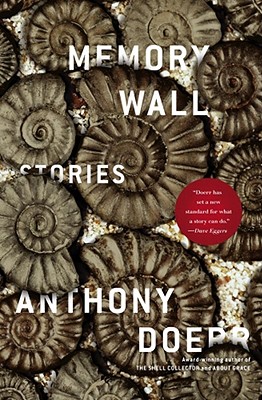
Today, in the 11th volume of AYS? I will be directing your attention to Anthony Doerr's new short story collection, Memory Wall.  I know, I know, nobody likes to read short stories anymore, but people, I'm here to tell you that you need to get over this phobia.  Short stories are the best way to discover new writers!  Where would we be without Chekhov, Poe, or O. Henry?  Most authors of quality start out writing short pieces before they can convince anyone to read their full-length novels.  Tobias Wolff, Jhumpa Lahiri, Robert Olen Butler, Ron Carlson, Alice Munro, Lorrie Moore, Wells Tower...embrace the short form!
"It's fair to say that Anthony Doerr is doing things with the short story that have rarely been attempted and seldom achieved."  -Dave Eggers
Doerr is also the author of one of my favorite novels from the past few years, About Grace.  (Still available for viewing on the Warwick's Bestsellers display.)  Sidebar: Grace is the story of one Henry Winkler who, throughout his life, experiences prescient dreams, usually of mundane, everyday occurrences that nevertheless come true every time.  Henry goes about his life, gets married, has a daughter, names her Grace.  One day, he has a dream that he is caught in a massive flood and has Grace swept from his arms by the torrent.  Naturally, this is a problem, as his dreams literally come true, so Henry decides that if he isn't around for the flood to sweep Grace away, it can never happen.  So he leaves his family behind in an attempt to save his daughter.  The rest of the book is about the circular path Henry's life takes, always trying to get back to his wife and child.  Heartbreaking, beautiful, great.

The title story from Memory Wall starts off with the Doerr's characteristic strength of prose and vivid descriptions of the natural world at large that instantly hooked me:
Seventy-four-year old Alma Konacheck lives in Vredehoek, a suburb above Cape Town: a place of warm rains, big-windowed lofts, and silent, predatory automobiles.  Behind her garden, Table Mountain rises huge, green, and corrugated; beyond her kitchen balcony, a thousand city lights wink and gutter behind sheets of fog like candleflames.
I always recommend reading the first page of anything you're interested in - if it grabs you right away, keep reading.  If not, move on.  Memory Wall is, as Mr. Doerr says "a collection of 4 stories, two novellas, all spiraling off the central idea of memory."  The two novellas - the bookends of the collection - are far and away the strongest of the bunch.  The title story is set in a sort of dystopian Cape Town, South Africa where the technology has been invented to retrieve memories from the brain and store them digitally for later re-visiting by the owners.  For example, Alma is an elderly woman who has the means to be able to afford such a luxury (it is almost prohibitively expensive) and as she is slowly succumbing to the ravages of memory loss and dementia, she can now access the memories of her life that she has lost.  Alma is vulnerable and dependant on others, and so open to the evil machinations of men.  When nefarious parties learn that Alma may have a memory stored away of a lucrative, secret event, she and her memories are exploited for financial gain and potential fame.  Is there enough of Alma still inside her own head to keep her memories safe?

The other novella, Afterworld, reminded me quite a bit of another contemporary of Doerr's, Kevin Brockmeier and his novel The Brief History of the Dead.  In Brockmeier's novel, when we die, we pass over to a massive city, where we wait, living rather normal lives, until there are no more people left on the planet with a first hand memory of us.  Doerr's story is similar in that Esther, raised in a German Jewish orphanage during WWII, is the sole survivor of the group of young girls who were living in the orphanage when all were sent to concentration camps  by the Nazis.  Now an elderly woman, she slips in and out of our world and the next, where her childhood friends await, ready to move to the next, final world.  For Esther, the memories flood her mind and she floats through the diaphanous, fragile barrier that exists between these multiple worlds, only to return to reality, as her corporal body is not yet ready to depart.  Sad, but a beautifully wrought & powerful story.

Among the other stories, Village 113 - about the building of China's Three Rivers Dam and the ancient community uprooted by its construction - won a prestigious O. Henry Prize in 2008 (his third win) and The River Nemunas - a young, orphaned girl moves from Kansas to Lithuania to live with her grandfather - just recently won a 2011 Pushcart Prize.  So, other people think these are pretty good too, just in case you didn't want to take my word for it.

Don't dismiss a book just because it is a collection of short stories - you may be missing out on a fantastic new author that could expand your reading horizons to levels you never thought possible.  Dip in, read one or two, put it down, read something else, loan it to your friend, come back to it later - they're not going anywhere.

Visit anthonydoerr.com for more - you can also read some of his stories as well as a few of his fantastic nonfiction essays.  (My favorite is "Butterflies on a Wheel" from 2008's Granta 102.)

Friday, June 25, 2010

Are You Seth? vol.10

The Day has finally arrived - Tuesday, June 29th is the release day for David Mitchell's new novel, The Thousand Autumns of Jacob De Zoet.  Why is this important, you ask?  Besides the fact that Mitchell is my favorite author - a fact that you should be fully aware of - this is the best novel I have read yet so far this year. 

Mitchell is the author of four previous books, two of which (Number9dream and Cloud Atlas) were short-listed for the Booker Prize (his fourth, Black Swan Green, made the Longlist).  Born in England, he spent about a decade living in Japan (where he married his wife and started his family) before moving to Ireland in 2002.  He has been named one of the Granta's best young novelists and Time magazine picked him as the lone literary novelist on their 2007 list of the 100 most influential people in the world.  Whadda-ya think of that?  Where've you been?  Cloud Atlas has long been one of my favorite books - it has resided comfortably on the bestseller display at Warwick's since its release in August 2004.  Granted, that's mostly because I won't allow it to be removed, but still, we've sold almost 500 copies in that timespan.  And where Cloud Atlas is a complex, multi-layered force of nature - featuring 6 different storylines that intertwine and merge into one conhesive portrait of humanity - Thousand Autumns is rather straightforward in its narration and scope.

It is set in 1799 on the manmade, Dutch trading post island of Dejima off the coast of Nagasaki, Japan. Incredibly, Dejima was a very real place - in the 16th & 17th centuries, foreign traders were not allowed to set foot onto the actual mainland of Japan and were relegated to life on this fabricated island.  Jacob de Zoet is a clerk for the Dutch East India Company assigned to Dejima who just wants to do an honest job, make a little money, and work his way back home to his future bride. If only life in a David Mitchell novel were that simple.

The Dutch survive as Japan's sole trading partner through an uneasy alliance based on the certainty of supplies from the outside world - what happens when something goes wrong on the supply chain?  Jacob is faced with internal corruption and vicious political manuevering, the delicate balancing act of the Japanese partnership, a daunting language barrier, the mysterious banishment of the woman he loves, the hushed-up financial collapse of his employer, and an imminent attack by foreign invaders, all of which test the limits of his faith - a faith strictly forbidden in Japan on the cusp of the 19th century. There are multiple narrators throughout, as is Mitchell's wont, but it is structurally done in such a subtle way that you hardly notice - you are just swept along in the flow, wondering, as a foreigner like Jacob, how much of the lush, inner world of Japan you will be allowed to glimpse.

This is really fantastic, fully-rendered historical fiction - if that's your bag, check this out for sure.  If you're a David Mitchell fan, there should be no question of which book you purchase from your local, friendly independent bookstore on Tuesday.  For more on Mitchell, check out his interview in the current edition of The Paris Review (there's an excerpt available on their website.)  Or for even more, come to Warwick's and Steven and I'll tell you all about him.

Sunday, April 25, 2010

Are You Seth? vol.9 or What's New This Week?

It's been a couple of weeks since I last posted a round-up of the new releases for the week - and even longer since I posted anything resembling a book recommendation, so I thought, since most of this week's releases (especially the paperback ones) are so decidedly "Seth-friendly", I'd offer a combo deal.  By the way, if you like reading about the new books here on the blog, let me know: either in the comments field, at info@warwicks.com or just by coming by on the second Tuesday of every month for Coffee with a Bookseller and telling me in person. (Or any day, for that matter.)
  • The 9th Judgment by James Patterson - being the cynical, snobbish jerk that I am, I've been considering a James Patterson-related personal challenge to myself for several months now & I think the time is ripe. Depending on the number of chapters - I assume this will have at least 100 - I will be undertaking somewhere in the neighborhood of 100 Days of James Patterson, during which I will read one chapter a day & post my thoughts on the daily reading to my blog, The Book Catapult. I might chicken out, but for now, I'm doin' it! It's gonna be hilarious. By the way, in between writing or co-writing 5-9 novels each year (last Fall he signed a 17 book, 3 year deal with Hachette), Patterson also watches a lot of movies: check it out.
  • Island Beneath the Sea by Isabel Allende - always a major publication, a huge bestseller, and destined to be a favorite of Jim S. from Warwick's. Here's a summary from isabellallende.com: Isabel Allende’s triumphant return to historical fiction tells the story of Zarité, a nine-year-old mulatto girl who is sold as a slave in eighteenth-century Santo Domingo. This sweeping novel follows her and other slaves over forty years, telling the story of their exploitation and the miserable conditions of their lives. Adding depth and color to the story are the women who help Zarité survive: Violette, the prostitute; Loula, the businesswoman; the witch Tante Rose; and the plantation cook, Tante Matilde. In Zarité, Isabel Allende has created another of her unforgettable characters: a fighter, a heroine, a woman who will prevail regardless of what the future might hold.
  • Ilustrado by Miguel Syjuco - before this debut was even published, it was awarded the 2008 Man Asian Literary Prize (the judging panel called it "brilliantly conceived, and stylishly executed" written with "seemingly effortless skill.") and the Grand Prize at the Palanca Awards, the highest literature prize in the Phillipines. C'mon, that's pretty impressive. "It begins with a body. On a clear day in winter, the battered corpse of Crispin Salvador is pulled from the Hudson River - taken from the world is the controversial lion of Philippine literature. Gone, too, is the only manuscript of his final book, a work meant to rescue him from obscurity by exposing the crimes of the Filipino ruling families. Miguel, his student and only remaining friend, sets out for Manila to investigate. To understand the death, Miguel scours the life, piecing together Salvador’s story through his poetry, interviews, novels, polemics, and memoirs. The result is a rich and dramatic family saga of four generations, tracing 150 years of Philippine history forged under the Spanish, the Americans, and the Filipinos themselves. Finally, we are surprised to learn that this story belongs to young Miguel as much as to his lost mentor, and we are treated to an unhindered view of a society caught between reckless decay and hopeful progress." I, for one, can't wait to read this.

    New Paperbacks:
  • Zulu by Caryl Ferey - the latest crime novel release from the wonderful Europa Editions. A violent, shocking account of crime in modern South Africa - which is not the happy place we may think it has become in the last decade. From my Book Catapult take: "I think what disturbed me so much was that the violence never felt gratuitous in any way - it just felt real, which is a lot scarier. You learn about halfway through that this is one of those books where no character is safe - just like it would be if this were a true story. Once the gang that (detectives) Ali & Co. are chasing realizes that cops are, in fact, touchable, the whole game is turned on it's head and you really never know what will be lurking in the next set of shadows."
  • The Selected Works of T.S. Spivet by Reif Larsen - one of my favorite books from last year, now out in paperback. I'm going to plug my other blog again, where I've written about Spivet on several occasions, so forgive me: #2 on the 2009 Catapult Notable List. If you're ever wondering what sort of book is infinitely better in a bound-book format (rather than an e-book one), T.S. Spivet is the perfect example. A masterfully illustrated novel of a wandering genius boy that is unlike anything you have ever read, I guarantee it.
  • Sanctuary by Ken Bruen - I'm a huge Bruen fan, as most Warwick's regulars know, and while I did really like the story to this, the seventh Jack Taylor novel, I was extremely miffed at the large-type, double-spaced, 202-page, $25 hardcover edition that came out last spring. I feel a little better about it as a $13.99 paperback. If you like crime novels and have not read this series, come talk to me.
  • The City and the City by China Mieville - #6 on the 2009 Catapult Notable List. (Like I said, a very "Seth-friendly" week of releases.) The LA Times called this "a Philip K. Dick and Raymond Chandler love child...raised by Franz Kafka." Here's my "Warwick's Recommends":  "In a style similar to Philip K. Dick or Jonathan Lethem’s Gun, with Occasional Music, Mieville expertly blurs genre lines in this science fiction crime novel of a bizarrely divided city. The city is one physical space, but partitioned by an otherworldly division – they merge & blend, but the residents always stay separate, avoiding eye contact, out of a collective fear of the spooky Breach, the overseers of this crazy sociological experiment. But what happens when a woman is murdered in one city, but her body is discovered in the other? There is not much negotiating with Breach, so the politics for Inspector Tyador Borlu are complicated, to say the least. A crazy cool novel."
Don't forget, Coffee with a Bookseller (aka: Coffee with Seth) is on the 2nd Tuesday of every month at 10:00am. (Next one is May 11th)  Free coffee, free scones from Brick & Bell, and free book advice! ***Starting with the May edition, anyone in attendance will receive a 20% discount on any of the books I talk about - only good on that day. Pretty sweet!***

Monday, March 8, 2010

Are You Seth? vol.8

The Devil's Star by Jo Nesbo - on sale Tuesday!
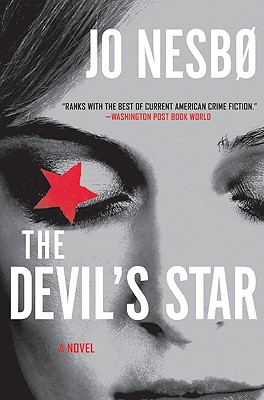
In all honesty, most of the fallible detective types in these crime novels I read all sort of blend together after awhile. "Wasn't that alcoholic, Scandinavian cop in that other book by that other guy?" This is by no means a knock on the authors or their books, just maybe a criticism directed at me, who can't seem to space these books out enough so that I can tell these characters apart. Anyway, the point is that none of this applies to Norwegian author Jo Nesbo and his unfortunately named, brilliant, alcoholic Oslo police detective, Harry Hole. The Devil's Star is the third of Nesbo's books to be translated into English and, I think, the finest in the series to date.

Normally, I wouldn't hesitate in steering a reader towards a book set later in a series if I really felt that the order to the books wasn't vital to understanding the plot - Henning Mankell's Wallander series, for example, doesn't really need to be read in order (especially as they were not published in the States in the correct order.) You do need to read Jo Nesbo's books in order, however, to better appreciate the political morass that is the Oslo police department and the tense undercurrent of hate flowing between Harry and his co-worker, Tom Waaler. In The Redbreast, Harry begins to suspect that Waaler isn't exactly Oslo's most honest cop, but the tension doesn't go farther than angry conversations and some bad blood. In Nemesis, Waaler is the title reference, as Harry begins to suspect that he has had a role in the death of a colleague and has elaborately set Harry up to take the fall. Everything comes to a head in The Devil's Star, as Harry is reluctantly paired with Waaler on his latest case, but can't let on that he has suspicions as to Waaler's corruption.

Without sacrificing plot for character, Nesbo manages to perfectly work this cranked-up tension between cops into this labyrinth of a crime novel. Harry is, like I said, a flawed man - by the events in TDS, he has managed to mangle his once-healthy relationship with his girlfriend, ostracize himself from most of his co-workers, and is steadlily drinking himself into oblivion. Ah, but he's still a great cop! When a girl's body turns up, missing an index finger and sporting a 5-pointed red diamond under her eyelid, Harry works through his hatred of Waaler to try and solve the case. He soon realizes that there is a pattern between this and several other Oslo murders - could a serial killer be at work? Coupled with the political tension, this novel crackles with intrigue, mystery, and psychological complexities - a great read for fans of Henning Mankell, Ken Bruen, Karen Fossum, Olen Steinhauer, Ian Rankin...the list goes on.

Friday, March 5, 2010

Are You Seth? vol.7

Warwick's has been a chaotic, exhausting place this week - we've been having beautiful new carpeting put in storewide, which entails moving everything off of the floor so that the old carpet can be torn out and the new can be laid down. This makes for long days for booksellers. But I'm still managing to get some reading done - over on my other site, The Book Catapult, you can read about the ten books I've read so far in 2010. Or, we can talk about books in person, as there's another edition of "Coffee with a Bookseller" coming this Tuesday morning at 10AM, where you and I can rap about what's new & good for you in books.

To tide you over, let's talk about journalist Ted Conover's new book, The Routes of Man: How Roads Are Changing the World and the Way We Live Today.

As a reader of maybe 98% fiction, I tend to not be able to read through nonfiction books at one go and I need to break them up with novels for some reason. I've been chipping away at this one for the better part of a month, but I'm going to commit a bit of bookseller taboo and recommend it anyway. Conover is the author of three previous books that I've loved: the National Book Critics Circle Award-winning Newjack (when he was denied entry into Sing Sing prison for a story, he got a job as a prison guard there instead), Rolling Nowhere (he spent a season literally riding the rails with the last of America's hobos), and Coyotes (this should be required reading for anyone living in Southern California, as Conover repeatedly crosses the Mexican border, dodging the INS with illegal migrant workers). Routes (his first book in over a decade) is a series of six loosely linked essays about the culture of the road across the globe - how those roads connect us, divide us, and alter our world, for good or for ill. In his typical fashion, Conover doesn't just report on a story, researching from afar - he fully immerses himself in the issue, no matter the circumstances or discomforts. The first essay here is my favorite - "Forest Primeval to Park Avenue" - in which Conover travels the hard route taken by Peruvian mahogany as it is cut (often illegally) and taken overland through the mountains and jungles to be processed and sold as furniture, crown moldings, and cabinet doors in the United States. (My father was a cabinet maker, so I've always been curious, but I never really thought about all of the logistics involved.) From there Conover travels to India's Zanskar Valley ("Slipping From Shangri-La") to trek a footpath across the Himalayas only accessible when the river freezes, which literally frees the local teenagers to be able to walk out into the world at large. Then to the overland trucking route across East Africa ("The Road is Very Unfair") that has been the superhighway for the AIDS virus to spread across the globe. And on to the series of highways dotted with Israeli checkpoints across the whole of the borderland between Israel & Palestine ("A War You Can Commute To"). (That's as far as I've gotten, but the other 2 parts are about the burgeoning car culture in China, reminiscent of the 1950's in the US, and traveling the harrowing highways of Lagos, Nigeria in an ambulance.)

Conover has an unparalleled skill at giving the reader the sense of total immersion - really, due to his own personal immersion in the subject matter. This is not pedestrian journalism here - more in the vein of Sebastian Junger or Jon Krakauer - and his life is often as in danger as you would imagine it to be in such rough corners of our world. The reviews I have read (a couple have run in the New York Times, which is always a good sign) have all been positive, but have mildly complained about the overall cohesiveness of this book - Conover struggles to link all the narratives into his greater theme - but even the slightly negative press has recognized Conover's skill at writing the adventure/travelogue, which is what attracted me in the first place. Maybe he shouldn't have tried to link everything together thematically & just stuck with his real strength - straight-up, hardcore journalism, of which he has few peers.  Most definitely worth checking out.

Friday, January 22, 2010

Are You Seth? vol.6

For the first volume of "Are You Seth?" for 2010, I have chosen the last book I read in 2009 - Colum McCann's Let the Great World Spin, winner of the 2009 National Book Award & a book that completely surprised me in it's brilliance and simple elegance.

I honestly had not noticed Let the Great World Spin much before it won the National Book Award. It had an interesting cover - a drawing of NYC by artist Matteo Pericolli - but ended up lost in the shuffle on the hardback tables at Warwick's. After the award, it was rushed to paperback by Random House, complete with a shiny gold "award winner" label & was given prominent display space in the front of the store. But it's one of those paperbacks that annoyingly does not have any plot synopsis on it's cover, so I pretty much ignored it, since I had no idea what it was about. Then I somehow stumbled across the old New York Times book review from August and my eyes were finally opened.

Those that know me - or have heard me blathering in Warwick's or have read my reviews in various places - know that I love novels with multi-layered, labyrinthine structures that try to engage the reader by tripping them up when they think things are safe and normal. I want to be challenged when I read fiction - the books that have a playful structure are always the ones that stick with me, long after I've closed their covers. Colum McCann has created just such a novel, with just such a structure, but in such a simple, subtle way, as to not confuse or alienate the reader - hence the massive award, I suppose. Jonathan Mahler said it best in his NYT book review, that this book "will sneak up on you", beginning "slowly and quietly on the other side of the ocean".

The story drifts easily between multiple narrators & differing storylines - all set somewhere around the day in 1974 when Philippe Petit walked his tightrope between the Twin Towers - while the characters float in and out of each others sections, showing the reader how easily all of our lives can be connected.

Ciaran & John Corrigan are brothers from Dublin, making their way on the mean streets of New York. John - "Corrigan" to everyone who knows him, even his brother - is a priest who forgoes all personal pleasures & ammenities in an attempt to make the lives of his local cadre of prostitutes slightly better. Claire Soderberg is the lonely Park Avenue wife of a city judge who's mourning the loss of her son in Vietnam through a women-only support group. She finds an unusual bond with Gloria, a middle-aged black woman whose three sons were killed in the same war. Lara is a recovering addict & a trendy Greenwich Village artist struggling with her identity in the wake of several drug-fueled years. Corrigan's van is hit on the FDR by Lara & her boyfriend, killing Corrigan's passenger, Jazzlyn. Jazzlyn's prostitute mother, Tillie, is sent to prison by Claire's husband, the Honorable Judge Soderberg, whose next case happens to be that against the tightrope walker, just brought to earth. Lara, crippled by guilt, seeks out Ciaran for reasons she's unsure of. Gloria, seeking a new meaning to her life, ultimately adopts Jazzlyn's two daughters, one of which seeks answers from Ciaran later in life.

All plots within are circular, wrapping around and through each other to create a magnificent, beautifully told tale of, well, life as a human being. It's at times a love letter to the city of New York and its multitudes, a polemic on the duplicitous nature of humanity, and an ode to the fallen Towers, in their innocent prime in '74. But more than anything, it is a story about people and how you just never know how your actions, thoughts, and prejudices affect those you come in contact with every single day. So, hang up that cell phone, look one another in the eye, and remember what our common bonds really are, because you never know who you might be talking to and how integral to your own life they just might be.

Tuesday, November 24, 2009

Are You Seth? vol.5

In Volume 4 of Are You Seth? I discussed what I (then) consider(ed) "the best" novel from 2009, The Selected Works of T.S. Spivet by Reif Larsen. However, being an indecisive fellow, if I am completely and totally honest with myself - and you - I cannot so blithely announce a favorite book, when, as Yoda would say, "there is another". If I had not been fortunate enough to read Spivet, then Everything Matters! by Ron Currie, Jr would hands-down, without a doubt, be the best novel I read in 2009. Even as things are, I'm not sure which book is better anyway... I should just shut up.

Imagine that you were born with the absolute, unquestionable knowledge that the world would be destroyed in a fiery comet collision somewhere in the vicinity of your 36th birthday. (Bear with me here.) How would you live your life, knowing that every single thing you do or say or think is either futile or at the very least, more finite than we are comfortable thinking about? Would you use your knowledge to try and save the world? Or just your own family? Would you just try to forget and just drink yourself to death? Or would you just live your life as normally as possible? Does anything you do matter? These are the questions posed to Junior Thibodeau, born with an all-seeing, all-knowing voice inside his head that shares all of its vast knowledge with him, turning him into a lonely, introverted, alcoholic genius who feels that no one really knows him since he cannot share the knowledge he possesses. He peppers his life with poor decisions, all under the ruse that nothing he does in life matters at all, since the outcome is so devastatingly pre-determined. But the one constant in life, he finds, is love, and no amount of destiny can impede that emotional connection to other people in your life.

Currie has taken a highly unusual, potentially disastrous premise and created a completely plausible, emotionally resonant life story around this Junior Thibodeau, born with a unprecendentedly unique prespective on the world. Junior spends most of his 36 years dwelling on the fact that the world will be destroyed - so much so, that he doesn't know how to actually live a life based in the moment. Once he discovers - perhaps too late? - that life is all about living from moment to moment, that unique perspective he had completely changes, even if the fate of the world may not. Thankfully Currie allows his readers to avoid the potential for morbidity and overwhelming depression of such an end-of-the-world story, by writing this tale with substantial humor and grounding Junior in reality by lending his "inside voice" a deep-seeded, genuine bonhomie. Despite his mistakes, I cared a great deal about Junior and those he loved - in spite of the fact that I shared his absolute knowledge that he would certainly go down with the ship when that fateful comet arrived. What can I say, it really hit home with me. It was just one of those books that totally caught me off guard and has stuck with me ever since - I knew from about halfway through that I will read this book over and over and over again throughout my life, always having my own unique perspective on the life of Junior Thibodeau.

***A revision on this "one other note":  the second edition of "Coffee with a Bookseller" is (re)scheduled for Tuesday, January 12 at 10:00am. (December is just too busy, hence the resched.) Come on down to the store, have a cuppa joe with me & I'll talk books right to your face!***

Monday, November 16, 2009

Are You Seth? vol.4

Let's step back a bit for this edition of "Are You Seth?" - step back to a simpler time... This book has been on the shelves at Warwick's since May 5th of this year, but I'm afraid that there are still those of you out there who have not only not read this yet, but have never even heard of it. For shame! The Selected Works of T.S. Spivet by Reif Larsen just might be the best book out there this year and it has brushed past you like a specter in the night...
"Do you ever get the feeling like you already know the entire contents of the universe somewhere inside of your head, as if you were born with a complete map of this world already grafted onto the folds of your cerebellum and you are just spending your entire life figuring out how to access this map?"
Twelve-year-old genius cartographer, Tecumseh Sparrow Spivet lives on a ranch in Montana with his family - to his young eyes, his mother is a floundering entomologist and his father is an unloving, gritty rancher. Ever since his younger brother died tragically the summer before, T.S. feels as if his parents don't care whether he's present or not, and he retreats into the elaborate mapping of his world. Now, these are not maps in the traditional cartographic sense, but rather intricate diagrams and illustrations of every object, experience, and thought that he deems important enough to put down on paper. An elaborate diagram of a "Freight Train as a Sound Sandwich", the history of 20th century, mapped according to 12-year old boys eating Honey Nut Cheerios, the structure of the Bailey train yards in Nebraska. The scientific drawings he does for a professor friend at Montana State are so accurate and so beautifully rendered, that the professor sends them off to "the attic of our nation", the Smithsonian in Washington, without T.S.'s knowledge. When the museum awards T.S. the distinguished Baird fellowship, without knowing that he is only in junior high, T.S. debates whether to accept his new life or to continue in anonymity on the ranch. In light of his parental ignorance, this boy who has never been more that 50 miles from home, decides to slip off under cover of darkness, hop a freight train, and make his way across the country, on his own, to accept his award in D.C.

As a reader, I relish those books that challenge my perceptions of what a novel is meant to be, bending the rules of narration to create something truly unique and wonderful. The trick here lies in Larsen's delivery of T.S.'s story, not just in the tale itself.  Being that our narrator is a cartographer, we are provided with diagrammatical footnotes in the margins as a sort of illustration of whatever T.S. sees or thinks about. When confronted by a bible-thumping hobo, T.S. illustrates the man's terrifying features under the journal heading, "Fear is the Sum of Many Sensory Details". He has never seen a car with spinning rims before - "The Car With Black Windows That Drove Backwards While Traveling Forwards". The added element of these illustrations creates an entirely different book - one that transcends mere novel and becomes a visual, physical mapping of a story. A novel as art, if you will - in a more literal sense. T.S.'s humor, naivete, and intelligence become remarkably magnified through his maps. Everything he experiences becomes heightened and the writing takes on a more evocative air when coupled with these remarkable additions, creating a beautiful, hilarious, moving story unlike anything I have ever read.

How could there possibly be another novel this year that is more of a complete package than this? I was left stunned by it's brilliance and humbled by Larsen's talent.

Monday, October 19, 2009

Are You Seth? vol.3

I will admit, I struggled through Iain Pears' labyrinthine, 700+ page mystery, An Instance of the Fingerpost, when I read it back in the day. It weighs in at over 700 pages, tells the story of a murder from 4 differing perspectives, and while it took me forever to get through, I realized afterward that I love books with narrative structure like that, which ultimately lead me to authors like David Mitchell and Orhan Pamuk. That said, Pears has returned with a similarly structured new novel, Stone's Fall, which encompasses the life of a wealthy turn-of-the-century industrialist named John Stone. When Stone dies under mysterious circumstances in 1909, (did he fall out the window, jump out the window, or was he pushed out the window?) a young reporter begins to dig into Stone's life, not entirely sure what he is unearthing or who is pulling his strings. When the enigmatic Henry Cort directs him to pre-WWI spygames in Paris 1890 and Venetian industrial espionage in 1867, this incredible onion of a novel begins to gradually unfold.

Pears expertly keeps the storyline unfolding backwards in time, until all preconceived notions we may have about the characters (established chapter to chapter) are sufficiently pummelled into submission and reworked. In each section, the reader emerges with a completely new perception of what Stone was really like, as well as what the motives and ambitions of the people he surrounded himself with really were. Great reading for fans of historical fiction (not the romancy type, more meaty like Neal Stephenson or James Clavell), historical mysteries (such as Caleb Carr or John Dunning) or even Iain Pears himself.  Well worth the time investment, a fascinating, meticulously researched, multi-layered masterpiece. Leaving you asking, who was John Stone, really?

Wednesday, October 7, 2009

Are You Seth? vol.2

Even though I wrote a very similar post for my own site last week, (see The Book Catapult) I thought I'd post an abbreviated version of my review here on the Warwick's blog since no one reads both, do they? Although, you could read both and I wouldn't mind, really. Besides, I really liked this book, so what's the harm? For more of my shameless self-promotion, visit sethmarko.blogspot.com!

Homer & Langley by E.L. Doctorow
Homer and Langley Collyer - fictionalized here in E.L. Doctorow's new novel, but actually real figures from early-1900's NYC - lived lives that are rather hard to comprehend for the average human: born into the New York upper crust of the turn of the 20th century, they chose to seal themselves off from the world amid the squalor of their townhouse, their quality of life steadily degrading with the passage of time.

Over a 50 year span, with virtually no prompting from the outside world, the brothers - crazed, WWI vet Langley and blind, innocent Homer - collected every manner of object, paper, or item that either of them deemed necessary. A full Model-T in the living room, multiple pianos for Homer to play, and the newspapers, oh my god, the newspapers - the literal foundation of their empire of squalor. Langley was convinced (most likely from his experience breathing mustard gas during the war) that news could be condensed down to a few basic, archetypal storylines. He believed that every human story repeated itself so much that one could print a newspaper for all time, so to speak, with articles that would pertain to any possible story that could ever happen, anywhere. This paper would need to be published just one time, ever, since the stories are so cyclical. To research every possible storyline, in order to print such a masterpiece of humanity, Langley needed to read and keep, in perpetuity, every single newspaper printed in New York City. The Collyer home was eventually stacked, quite literally, floor to ceiling with these papers - a fact that would lead to their eventual demise.

Doctorow skillfully brings these people back to life - not necessarily out of his own head this time, but more from the ashes of American folklore, which is where their incredible story has ended up residing. Homer exudes such a simple innocence throughout his brother's madness that you cannot help but sympathize with his plight - a plight only made liveable by the simple fact that he cannot see any of it. Again though, this fact is ultimately the undoing of both men and their odd, symbiotic relationship. The final paragraph - without spoiling anything for you - is one of the most arresting I have ever read, anywhere. Even though I knew how the real story of the Collyers ended, Doctorow's prose stopped me dead in my tracks, mouth agape. These men were magestic fodder for the very objects they collected - a story so bizarre, that even Langley couldn't possibly have found room amongst his archetypal "newspaper for all time".

Saturday, October 3, 2009

Are You Seth? vol.1

"Are you Seth?" is, apparently, a common question in the book department whenever I am not around. (Personally, I am rarely asked this, for whatever reason.) I read a lot and I write a lot about what I read - my "Warwick's Recommends" cards are in many places around the store - and many customers ask to pick my brain a bit about certain titles, share their thoughts on books we've both enjoyed, or even to ask me whether I "actually read any of these books" or to half-heartedly accuse me of plagiarizing from the New York Times - these are all great dialogues!  So, in answer to your query, "Yes, I am Seth." And these are the books I recommend.

This is the first of a regular post of extended book recommendations by yours truly. Shorter than a real book review, longer than a "Warwick's Recommends" card, I'll just enamor you with my scholarly wisdom and hope to convince you that these books are worth reading. For more on my personal reading habits, reviews (like E.L. Doctorow's Homer & Langley), rants, and reflections on bookworld trends, (plus a tad bit more foul language) visit my website, The Book Catapult.

The Financial Lives of the Poets by Jess Walter
Walter is the author of the 2007 Edgar Award winner Citizen Vince and the 2008 National Book Award Nominee, The Zero. I'm a big fan.

Halfway through this cautionary tale of financial woe, as my sides ached from laughing, I thought, “I had no idea Jess Walter was so funny”. The humor is very dark and the situation is bleak for sleepless, unemployed Matt, who is in danger of losing his house, his wife, all his money, and his sanity. Before the market crash of 2008, Matt quit his job as a financial news columnist to start an ill-fated website of poetry-laced financial tips and articles called poetfolio.com.
Buffeted by fuel costs soaring
and with labor costs surging
Delta and Northwest are exploring
the possibility of merging.
Two years later, after the website tanked miserably, he returned to the journalism job he left, only to be laid off when the market ultimately bottomed out. Now Matt can't find work, the bank is threatening foreclosure, his wife has managed to shop her way into an insurmountable credit card debt (and is more than likely having an affair), his children pick fights in their expensive private school, and his father, plagued by dementia, can offer no support, as he spends his days clutching his television remote and thinking in a perpetual loop. (His favorite refrain is, "Know what I miss?" - a question with only six possible answers, among them "chipped beef", "Angie Dickinson" and "The Rockford Files".) And his financial planner tells him that he has "fiscal ebola". One fateful evening, while purchasing $9 milk at a 7-Eleven, he decides to sell pot to his middle-aged contemporaries, as a way to make the money he needs to save it all – how do you think that ends?

At turns heartbreaking and hilarious, Walter has created a moving, timely, & very human story about how quickly our lives can change & how we each handle life’s persistent curveballs just a little bit differently.