Friday, October 8, 2010

So Many Dog Books, So Little Time

Before anyone jumps all over me (no pun intended) I just want to say that I love dogs.  Most dogs, anyway.  Although not currently a dog owner, I have been in the past - a dirty, white mutt named Margo when I was growing up and a short, overweight doberman pinscher (Jade) when I was in my 20's - and I loved them dearly as faithful friends.  Well, if I'm being honest, they were more "faithful animal companions" rather than "friends."  Actually, I think that distinction may be at the heart of my ensuing rant: I think we have a serious problem of overpopulation in this country...of dog books. 

I don't know if this problem is simply indicative of current trends in the book industry or reflective of our society as a whole, but the over-abundance of dog-related nonfiction titles clogging up the stacks of the nation's bookstores has reached a level of insanity that I am, frankly, uncomfortable with.

This is in no way a criticism of the buying habits of the book buyers in our nation's bookstores, of course, since I am to be counted among their number.  Who's fault could it be if half of every publisher's catalogue is dog books?  Nor can I really blame those readers who genuinely want to read tales of inspiring canines. Who am I to judge, right?  Currently, the following titles are available as new hardcover books & are all displayed on just one of the non-fiction tables at Warwick's.  None of these are available in the actual Dog section at the store, mind you - all are mixed into General Nonfiction.  You tell me if this is too many dog books:

Out of control.
  • The Dog Who Couldn't Stop Loving: How Dogs Have Captured Our Hearts for Thousands of Years by Jeffrey Moussaieff Masson
  • Oogy: The Dog Only a Family Could Love by Larry Levin
  • Katie Up and Down the Hall: The True Story of How One Dog Turned Five Neighbors Into a Family by Glenn Plaskin
  • Huck: The Remarkable True Story of How One Lost Puppy Taught a Family - and a Whole Town - About Hope and Happy Endings by Janet Elder
  • Last Dog on the Hill: The Extraordinary Life of Lou by Steve Duno
  • One Dog at a Time: Saving the Strays of Afghanistan by Pen Farthing
  • A Small Furry Prayer by Steven Kotler
  • Scent of the Missing: Love and Partnership with a Search-and-Rescue Dog by Susannah Charleson
  • The Lost Dogs: Michael Vick's Dogs and Their Tale of Rescue and Redemption by Jim Gorant
  • Life with Maxie by Diane Rehm
  • Fixing Freddie: A True Story About a Boy, a Mom, and a Very, Very Bad Beagle by Paula Munier
  • Cesar's Rules: Your Way to Train a Well-Behaved Dog by Cesar Millan (Cesar is a renowned dog trainer, but since it's new, I had to put it on the list.)
  • Through a Dog's Eyes: Understanding Our Dogs By Understanding How They See the World by Jennifer Arnold
  • The Divine Life of Animals: One Man's Quest to Discover Whether the Souls of Animals Live On by Ptolemy Tompkins
  • Rose in a Storm (A Novel) by Jon Katz
(I'd like to apologize to Steven Kotler and Steve Duno, who either have appeared at the store in the recent past or will someday soon - I have to include everyone if this rant is going to have any weight.)

Almost all of these books seem to be attempts at tugging at our heartstrings: Don't you want to see how dogs see the world?  Don't you want to know if your dog's going to heaven with you?  See how this dog changed the lives of __ number of people/families/towns/cities/libraries?  Look at this dog who loves this family even though he used to fight in dog fights!  Save the dogs of Iraq/Afghanistan/New Jersey!

I also can't help but get exasperated at the lengthy subtitles, all of which bear a similar message: "This particular dog - our dog - is the most incredible, life-changing dog, EVER!!"  C'mon, if I lacked any soul, I could write an inspiring story focused on one of my dogs too - but it doesn't mean that I should.


Jade, in her Mardi Gras attire.
Even worse, these are just the current stock of books with dog-themes.  We've had several best-selling novels with dog protagonists & plenty of memoirs concerning rescued dogs from war-torn countries, yet I blame the current overload almost solely on John Grogan and Marley.  C'mon, you know who I'm talkin' about.  Marley and Me: Life and Love With the World's Worst Dog was the publishing phenomenon of 2005 (and beyond - we've sold over 400 copies of the hardcover edition) and is currently still available as an illustrated edition, a mass market paperback, a regular trade paperback, a movie tie-in edition trade paperback (from the 2008 film with Owen Wilson & Jennifer Aniston), two kids' spin-off easy-reader editions, large print, and in Spanish, Korean, Chinese, and Japanese translations.  None of these are to be confused with Don Taylor's 1995 memoir, Marley and Me: The Real Bob Marley Story, by the way.

The counter-argument is bound to be that publishers only print what there is a demand for, so if you see a preponderance of dog-related titles, it's really because "they" are giving "you" what "you" want.  I realize that there is a certain demand for titles like these, but I think that there are far, far too many being produced - if I can count over a dozen in a 5-foot radius on a single table, then there are far too many out there.  It is sort of a "chicken or the egg" argument - would we want so many dog books if there weren't so many being produced?  Or are the publishers actually reacting to our national dog-love?  Is it all just manufactured demand?  Personally, although I love dogs, I don't necessarily want to read 10 inspiring non-fiction books about them.

If James Patterson writes a dog book, I will be forced to quit the book industry forever.

I guess what bugs me the most is that all of these books are getting published and thousands of other, worthy titles are rejected by publishers and end up never seeing the light of day.  Considering that somewhere in the neighborhood of 200,000 titles get published in the States annually (according to UNESCO) it seems proportionally out of whack that I can count so many new, inspiring dog titles for a single season.

But hey, this is just the opinion of one, single dog-loving bookseller who just can't take it anymore.  Feel free to sic the dogs on me - I can take it.

Friday, September 24, 2010

Celebrate Banned Books!

Happy Banned Books Week!  The First Amendment to the U. S. Constitution guarantees us freedom of speech, yet every year a large number of books are challenged in court and removed from libraries and schools, limiting the access that readers - especially young readers - have to them, restricting our basic rights of freedom. Removing books from public access is essentially a direct assault on a person's ability to choose what they read. This is where Banned Books Week comes in - BBW is an annual celebration of the freedom to read. In a salute to BBW, we will have a sharp-looking display of banned books at the store and, right here, a few of the Warwick’s staff have selected some of our favorite challenged books from the last decade or so, telling you why we love them and why they not only should never be banned, but should be READ!

John
To Kill a Mockingbird by Harper Lee
"Would any serious reader question the place of To Kill a Mockingbird among the great works of American literature? A compelling story with deeply affecting characters, the novel draws you fully into a world charged with issues central to the American experience: the interplay of race and class, the death of innocence, law and order, gender and family. This amazing novel has been challenged repeatedly, in schools and libraries, for its use of racial epithets, for its use at times of vulgar language, and its frank portrayal of rape. I would argue that these challenges point exactly to why this novel is so important  - it is honest, true-to-life and our history, and still able to arouse powerful, indeed, visceral responses."

James
Huckleberry Finn by Mark Twain
"Twain captures the humor and contradictory morals of the pre-Civil War Antebellum South. Banning this book for racism misses the whole point he was trying to make with his satire. Every time I read it, I find something new to consider."

Janet
In Cold Blood by Truman Capote
"The banning of books in itself makes me sick at heart. When I scanned the lists of challenged books I was amazed to find In Cold Blood by Truman Capote. That book is a modern classic, a beautifully written true story of random violence in America, timely and important."

Julie
A Prayer for Owen Meany by John Irving
"From the master of characters, John Irving is at his best. Owen Meany will stay with you for the rest of your life! Anyone over the age of 15 should be able to handle this book. Banned? Really?"

Rob
The Glass Castle by Jeannette Walls
"Jeannette Walls proves that success and normalcy can come of and despite family dysfunction, an invaluable lesson in the current social climate. Not only should this book NOT be banned, it SHOULD be read by all."

Heather
Twilight series by Stephenie Meyer
"I’m always appalled when I see that a book has been banned. I mean the Bible, Diary of Anne Frank, even Mein Kampf, these are all part of history! So why did I pick the Twilight books? Well, they too are now a part of history or pop-culture at least, and whether or not you love or hate them, they are a strong part of our current culture. Besides how offensive can you get when the hero and heroine remain virgins until marriage and place such an importance on family? This series was actually banned because it was too racy and too sexual. Go figure."

Jim
Lolita by Vladimir Nabokov
"I can see why a book about steamy pedophilia would be banned. However, the writing is intoxicating, characters engaging, and the tale beautifully told. Humbert Humbert’s obsession for the young Delores is told by him, and the description of the madness that ensues is part of Nabokov’s greatness."

Seth
"I've given this a lot of thought - Catcher in the Rye, Harry Potter, The Chocolate War - those are easy, smart-looking picks for favorite banned books.  In the Night Kitchen by Maurice Sendak has always been one of my favorite books that always surfaces on the list of those banned every year. Why all the hubbub?  (This is a Caldecott Honor book, after all.)  So the kid flashes the reader a little bit in the kitchen - no big deal.  I'm always flabbergasted by schools and parents who challenge books like this - it's the adults, of course, who are uncomfortable with a little naked boy in a book, rather than the kids reading them.  I know I didn't care when I was a kid reading this - I was too busy reading the awesome story.  After all, isn't that what reading is all about? When I was looking over the handy list of the American Library Association's Most Frequently Challenged Books I also discovered that the most challenged book from 1990-1999 was Scary Stories to Tell in the Dark by Alvin Schwartz.  Say what?!  Banned for being too...scary?  C'mon, people.  Go out and read a banned book."

Thursday, September 23, 2010

The Warwick's Questionnaire: Nicholas Sparks

The so-called Proust Questionnaire was originally a 19th-century parlor game designed to reveal bits of the soul, personality, & deep secrets of the participants through a series of pointed questions.  Versions of the quiz were re-popularized in the 20th-century by Vanity Fair and Inside the Actors Studio.  Our version - The Warwick's Questionnaire - is a series of ten questions designed to plumb the depths of the souls of visiting authors.

Nicholas Sparks is the massively popular, bestselling author of sixteen novels (six of which have been made into blockbuster films), including the brand-new Safe Haven.  He came by Warwick's on September 22nd to sign books for 300 of his biggest fans and he still found the time to answer our silly Questionnaire.

1. What do you consider your greatest achievement?
  • Helping my second son, Ryan learn to speak.
2. What is your greatest fear?
  • Disappointing those I love.
3. If you were a superhero, what would your power be?
  • Incredible luck.
4. If you could bring one writer back from the dead, who would it be?
5. Who is your favorite hero of fiction?
6. What is your most treasured possession?
  • My photo albums.
7. Which living person do you most admire?
8. If you were not able to be in the writing profession, what would your preferred occupation be?
  • I'd manage a global-macro hedge fund.
9. What are you most looking forward to seeing on your tour stop in San Diego?
  • My relatives.
10. What is your motto?
  • Live well, but buy a lot of insurance.

Friday, September 17, 2010

Coffee For the People!

Just in case you needed more reasons to get down to Warwick's on the second Tuesday morning of every month for Coffee with a Bookseller, our program got some great coverage this week in the widely-read book industry rags Bookselling This Week and Shelfawareness.  Don't be the last one on your block!  Get on down here next month!  (October 12)  The article:

Coffee With a Bookseller at Warwick’s
By Karen Schechner, for Bookselling This Week, on Wednesday, Sep 15, 2010

Seth's actual coffee in Hvar, Croatia
On the second Tuesday morning of every month, Warwick’s, in La Jolla, California, hosts “Coffee With a Bookseller.” The store serves free coffee and scones, and staff member Seth Marko leads customers on a “casual, informal journey” through new releases and Warwick’s staff picks.

“It can be a great way to connect with your reading community,” said Marko. “People love that it's informal, and I usually field a barrage of questions on how the book industry works, which is always fun to talk about. I love to point out to people that you don't get ‘Coffee With a Bookseller’ from Amazon or Barnes & Noble! It gets people thinking and keeps them shopping local.”

The 10:00 a.m. event has grown from a couple of attendees, when it first started in January, to about a dozen, “which is pretty much perfect,” said Marko. “It gets more and more popular every month as word gets around. People really enjoy the ‘insiders’ look at what's new, so when they come to one Coffee, they almost always come back the next month.”

Attendees receive 20 percent off any of the six to 12 titles typically discussed. Books mentioned at August's edition included: Super Sad True Love Story by Gary Shteyngart, I Curse the River of Time by Per Petterson, Star Island by Carl Hiaasen, and The Vanishing of Katharina Linden by Helen Grant.

Warwick’s is considering expanding the series. Marko said, “We've discussed a nonfiction branch with John Hughes, another of our booksellers.” For the holidays, the store is considering hosting a gift book/cookbook version.

Customers have a good time, and they buy books. “People love a discount, so when you couple that with a passionate bookseller in your ear, it usually translates to decent sales figures,” said Marko. “Last month I mentioned the paperback release of Everything Matters! by Ron Currie, Jr. and told everybody that it was my favorite book from 2009. We did quite well with that one that day.”

For the bookseller, it’s an ideal sales scenario – the customer is seated (Note: No seats! We stand!) and caffeinated. “Anytime I get to just talk about books I've read and enjoyed with a relatively captive audience is a lot of fun,” said Marko. “The best part of being a bookseller is getting the chance to tell someone about the books you love, right? What better way to do that than over a cuppa joe and a scone?”

Wednesday, September 8, 2010

The Warwick's Questionnaire: Christopher McDougall

The so-called Proust Questionnaire was originally a 19th-century parlor game designed to reveal bits of the soul, personality, & deep secrets of the participants through a series of pointed questions.  Versions of the quiz were re-popularized in the 20th-century by Vanity Fair and Inside the Actors Studio.  Our version - The Warwick's Questionnaire - is a series of ten questions designed to plumb the depths of the souls of visiting authors.

Christopher McDougall is a journalist and the author of Born to Run: A Hidden Tribe, Super Athletes, and the Greatest Race the World Has Never Seen about the barefoot-running, super-healthy Tarahumara Indians in Mexico.  In between working on his next book, he runs "in bare feet among the Amish farms in rural Pennsylvania," where he lives with his family.


1. What do you consider your greatest achievement?
    You can't run from the Warwick's Questionnaire.
  • Luck isn't really an achievement, but I'll claim it on a technicality. I have a knee-jerk instinct to say "Sure!" any time I'm offered work, only realizing later that maybe there are smarter ways to earn a buck than mucking blindly about in canyons or the Congo.
2. What is your greatest fear?
  • That I could be wrong about Answer #3.
3. If you were a superhero, what would your power be?
  • "If"?
4. If you could bring one writer (or runner? Your choice!) back from the dead, who would it be?
  • Give me just enough of Nelson Algren to splice with Emil Zatopek to create the coolest, toughest, cleverest bad-ass to ever walk the planet. Unless Johnny Cash makes it back first.
5. What is your most treasured possession?
  • I've got to steal this one from Geronimo: "I only trust my legs. They're my only friends." Everything good that has happened in my life has come from strolling, skulking or flat-out running into places I had no right being.
6. What living person do you most admire?
  • C'mon, what answer is there besides the Prez?
7. If you were not able to be a journalist, what would your preferred occupation be?
  • Have you ever heard of Statement Analysis? I came across a blog recently of a guy whose job is to analyze transcripts of criminal suspects. Super fascinating. Kept me up till 4am reading about odd little tells in the Amanda Knox and Madeleine McCann cases. "Guilty people have a difficult time saying four words," was one of the insights." And here they are: 'I didn't do it.' They'll embellish it, avoid it, try to persuade you that they're 'not the kind of person who could ever do something like that.' But 75% percent or more of guilty people will never say those simple words in their testimony." So yeah, sign me up for Statement Analysis 101 if this gig bottoms out.
8. How far can you run without shoes on?
  • TBD. Ever since I got rid of those Burmese Tiger Traps known as cushioned running shoes, I've stopped getting injured. I'm running farther, better and more consistently than I ever dreamed possible, so really, the only limits on distance are time and desire.
9. What are you most looking forward to seeing on your tour stop in San Diego?
  • An old friend from Philly, Jennifer Silverman.
10. What is your motto?
  • Once you BS your way into the job, you'll figure out how to do it.
Chris McDougall will be at Warwick's on Monday, September 13th at 7:30pm to discuss and sign his book, Born to Run.

Thursday, September 2, 2010

A Book Lover's Manifesto

by Adrian Newell, Warwick's Book Buyer

Recently, a local school district announced a major change in their school curriculum - the removal of classic literature as required reading because "classics," according to this district, have been deemed to be irrelevant. School curriculum will instead focus on math and sciences. Such a change in emphasis will most likely result in a negative effect rather than a positive one as reading comprehension has been proven to improve test scores as well as lay a good foundation for academic achievement in college.

This announcement triggered a heated discussion in my office regarding the negative side effects/fallout that such a shortsighted approach will produce…this took me down a mental “rabbit hole”, which brings me to the point of this, my first ever blog entry...and, no, the irony is not lost on me!

There has been a lot of chatter these past few years regarding e-books, digital content and platforms, which has led to the inevitable prediction of the demise of the printed book. Despite all this chatter it’s safe to say that no one was truly prepared for the exponential growth in e-book adoption as evidenced in this past year. Everywhere you turn there are articles etc covering this topic and the book industry has not been unaffected by this constant barrage of negative press regarding the future of the physical book. Physical books are already being relegated to the ranks of obsolescence and possible extinction. When self-professed book lovers and supposed supporters of independent bookstores (most notably Sven Birkerts in a recent WSJ article) agree can the end be far off?

It is not - unless book lovers unite to stem the tide of this potentially self-fulfilling prophecy. As long as we stand by, fail to speak out and remind/educate consumers as to what we stand to lose, we may witness a loss that will be devastating to the cultural and intellectual fabric of our society.

I grew up without a TV or phone. My parents were depression era babies and quite frugal in their approach to consumerism but books were always an important constant in our lives. We went to the library every week for a new batch of reading materials. They also took the time to read aloud to us daily. A favorite memory (and only good one!) from school was my 6th grade teacher who read The Hobbit aloud to us every day. The only effective way to get everyone to behave was the threat of not reading if someone misbehaved. This only happened once, after which the severe peer disapproval leveled at the miscreants was enough to keep everyone in line.

I credit my lifelong reading habits and exposure to the ideas discovered on the pages of books as my truest and best education.

At this point I feel the need to declare that I am not a Luddite...well perhaps a wee bit...I love the ease that certain technology has brought to everyday life. However, I view technology as a means to an end, not the end itself. I own an iPod, an iPhone, a computer, but at no point will these devices ever replace the satisfaction and joy of holding and reading a physical book. When I look at the books on my bookshelves I can clearly recall many happy moments spent reading as well as what was going on in my life at the time of reading specific books. They are a visual history of my life and looking at them evokes memories of people, places, and experiences that would be lost if my library consisted of only books downloaded to an e-reader.

Additionally, the literary life has put me in contact with many wonderful people who have enriched my life. Technology can be good, but also serves as a barrier to truly connecting with people. We are losing the art of conversation, letter writing, journal keeping etc...always connected but never truly connecting at more than a superficial level. Texting, tweeting, and emailing cannot adequately replace face-to-face conversation where you can look the person in the eye and watch their facial expressions mirror their thoughts and emotions. Nuance is lost in cyberspace and emoticons are a poor substitute for the real thing.

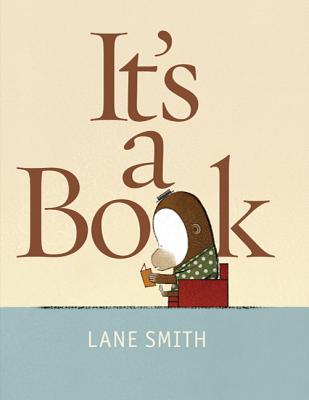
Recently I gave a shout out to It’s a Book by Lane Smith as my favorite book of the year. Why, you might ask, would I pick a children’s book above all the other deserving, finely written books of the past year?! Here’s why - he succinctly captures, with few words and charming illustrations, the current struggle between technology and the printed word. This is a book every book lover should read and share with others. (Check out his interview with the Wall Street Journal.)

So... my challenge to you is this. Just as we’ve seen a burgeoning “slow food” movement address the encroachment that fast food, processed food etc. has had on the culinary arts, I’d like to propose a “slow books” movement to encourage book lovers to go out and remind those around us of the importance and necessity of physical books. This is my call to arms and revolution, if necessary, to preserve something precious and vital to our culture.

Be retro, take a vacation from technology and unplug for a day...and use that day to reconnect with friends, explore the outdoors, or read a book. Most of all, speak out about this issue. Let’s not stand by doing nothing until it’s too late.

Be vocal, be proactive!

So spread the word, spread the love and give someone you care about a physical book this holiday season. It’s still the best entertainment value out there and time spent reading is never wasted!

Check out the following links to articles of interest on this topic.

http://news.bookweb.org/news/media-shines-spotlight-good-news-indie-bookstores
http://www.ebookskeptic.net/
http://www.regulatorbookshop.blogspot.com/

Tuesday, August 31, 2010

An Evening with the Warwick's Booksellers

This summary is not available. Please click here to view the post.

Monday, August 30, 2010

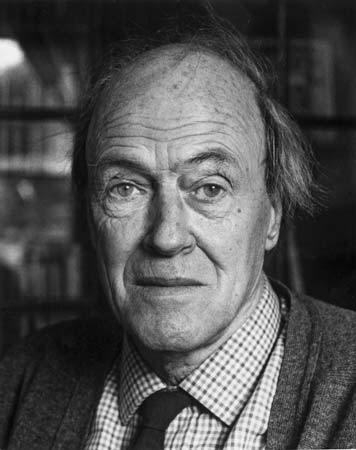
It's Roald Dahl Month!

In celebration of Roald Dahl month (his birthday would have fallen on September 13th) and the upcoming release of The Missing Golden Ticket and Other Splendiferous Secrets (the missing chapter from Charlie and the Chocolate Factory), Mr. Dahl will be the featured author in the Children’s Book Department at Warwick's for the month of September. Along with a special in-store display of Dahl’s books, we will also have a variety of Roald Dahl inspired giveaways for our young customers!

Dahl is an extraordinary author whose work has in some way touched, entertained, or in some cases frightened, us all (let’s face it, The Witches is pretty scary.) Whether drawn to his work after having seen one of the many films adapted from his stories, or having picked up one of his books as a child, the works of Roald Dahl have managed to influence the imaginations of readers for decades. Whether we've been drawn to the honesty of his autobiography Boy or sucked into the fantasy of James and the Giant Peach, we all manage to find something that calls to us in Dahl’s words.

We recently polled our the booksellers with the question “What’s your favorite Roald Dahl work, which did you or do you still pick up to read over and over again?” The abundance of written works by Dahl (numbering well into the 60’s according to roalddahl.com) makes it rather difficult to pinpoint a specific beloved story (it’s like having to pick your favorite all time movie without the benefit of segregating by genre), but when asked, it was surprising how quickly and diversely the Warwick’s staff replied. Here are their responses:

Emily: Matilda

John: Charlie and the Chocolate Factory

Seth: The Twits

Heather: Danny the Champion of the World

James: James and the Giant Peach

Scott: Fantastic Mr. Fox

Steven: The Witches


Jan: The BFG

Adrian: Tales of the Unexpected

Janet: George’s Marvelous Medicine

Susan: James and the Giant Peach

What are your favorite Roald Dahl books?  Write in and let us know!

Monday, August 23, 2010

The Warwick's Questionnaire: Melanie Rehak

The so-called Proust Questionnaire was originally a 19th-century parlor game designed to reveal bits of the soul, personality, & deep secrets of the participants through a series of pointed questions.  Versions of the quiz were re-popularized in the 20th-century by Vanity Fair and Inside the Actors Studio.  Our version - The Warwick's Questionnaire - is a series of ten questions designed to plumb the depths of the souls of visiting authors.

Melanie Rehak is the author of the brand-new Eating For Beginners: An Education in the Pleasures of Food From Chefs, Farmers, and One Picky Kid.  Her previous book, Girl Sleuth, was the recipient of two prestigious mystery awards, the Edgar (for Best Critical/Biographical Work) and the Agatha (for Best Nonfiction.)  She also writes the food column Paper Palate for Bookforum.com and passionately hates celery.

1. What do you consider your greatest achievement?
  • Right now?  That I got on a plane with a two and a half week old baby and flew cross-country just because my older son is so obsessed with surfing I didn’t want him to miss out this summer.  Usually? That I now know what to do with delicata squash and all that zucchini they always have at the farmer’s market.
2. What is your greatest fear?
  • That I’ll realize I don’t actually like zucchini. Or that I won’t be able to think of any more books to write and I’ll be out of a career since writing is pretty much the only thing I’m good at.
3. If you were a superhero, what would your power be?
  • The ability to make people forget that Facebook and Twitter exist for at least three to four hours every day.
4. If you could bring one writer back from the dead, who would it be?
5. What is your most treasured possession?
  • A late 19th-century watch that belonged to my grandfather and then my father.
6. What do you dislike the most about your appearance?
  • My eye bags (though I try to convince myself that eye bags are a writerly affliction to have, and at least they’re a far better one than being an alcoholic or a chain smoker)
7. What are you most looking forward to seeing on your tour stop in San Diego?
  • My older son in the ocean - it’s pure, unmitigated, contagious joy.
8. What is your least favorite vegetable?
  • Celery. Celery, celery, celery!
9. If you had to cook one meal for Nancy Drew, what would it be?  (Melanie's previous book was Girl Sleuth: Nancy Drew and the Women Who Created Her.)
  • Tea sandwiches made with local ingredients.
10. What is your motto?
  • "You’re not made of sugar; you won’t melt."  My father always said this to me when it rained but I think it applies in any situation.
Melanie Rehak will be at Warwick's on Wednesday, August 25th at 7:30pm to discuss and sign her new book, Eating for Beginners.

Wednesday, August 18, 2010

Gary Shteyngart: Super Sad, Super Funny

Gary Shteyngart and The Warwick's Staff
Can't Stop Loving the Camera
Gary Shteyngart, critically acclaimed bestselling author of Absurdistan and The Russian Debutante’s Handbook stopped by Warwick’s on Wednesday August 11th, to read from his latest, Super Sad True Love Story, a brilliant, hilarious, super sad (of course) look into a dystopian future ruled by personal electronic gadgets, credit scores, male hotness ratings and a cowboy-hat-wearing cartoon otter. You can watch the complete video below and be wowed by Mr Shteyngart’s driving skills, diminutive stature, charming self-deprecating humor, chameleon-like ability to pivot from New York Guy accent to Russian speaking elderly Jewish lady mid-sentence and his intestinal fortitude as he cut through a thorny thicket of questions with his machete-like wit about what it’s like in Russia and if he’s ever touched a student. Capitivating stuff. Trust us, most of the staff was on hand for one of the best events of the year.


Still reading?  Can't get enough of this event?  You're in luck, as we also have the audio from Mr. Shteyngart's appearance conveniently squeezed into a reasonably sized  mp3 file, which, for the purposes of branding we are calling The Warwick's Bookcast.


Powered by Podbean.com

We'll be posting regular podcasts in the future at this site: http://warwicksbooks.podbean.com/.  In addition to audio from our author events, we hope to be adding author interviews, bookseller picks and other crazy content, so it might be worth adding to your podcast rotation.  You can Subscribe to The Warwick's Bookcast using iTunes, or, if you don't use iTunes, our podbean page has several other ways of subscribing.


Monday, August 16, 2010

The Warwick's Questionnaire: David Herlihy

The so-called Proust Questionnaire was originally a 19th-century parlor game designed to reveal bits of the soul, personality, & deep secrets of the participants through a series of pointed questions.  Versions of the quiz were re-popularized in the 20th-century by Vanity Fair and Inside the Actors Studio.  Our version - The Warwick's Questionnaire - is a series of ten questions designed to plumb the depths of the souls of visiting authors.

Historian & Bostonian, David V. Herlihy is the author of Bicycle: The History and the brand-new, The Lost Cyclist: The Epic Tale of an American Adventurer and His Mysterious Disappearance.  If Hitler had invented the bicycle, David may have had to rethink some of his answers in our Questionnaire. 

David Herlihy, proud Cinelli owner
1. What do you consider your greatest achievement?
  • I’d say producing my latest book.  Second was beating Mark Allen (the future six (sic) time ironman) in a 9th grade cross-country run.
2. What is your greatest fear?
  • Not making an impact.
3. If you were a superhero, what would your power be?
  • Seeing through things.
4. If you could bring one writer back from the dead, who would it be?
  • Maybe Edgar Allen Poe.  He’d have a lot to reveal about the afterlife.
5. Who is your favorite character from history?
6. Who is your least favorite character from history?
  • Hitler.
Pierre Lallemont on his Velocipede
7. What is your most treasured possession?
8. What do you dislike the most about your appearance?
  • Right now it would have to be the extra pounds.
9. What are you most looking forward to seeing on your tour stop in San Diego?
  • The shoreline.
10. What is your motto?
  • Never give up.
David Herlihy will be at Warwick's on Thursday, August 19th at 7:30pm to discuss and sign his new book, The Lost Cyclist.

Monday, August 9, 2010

The Warwick's Questionnaire: Elizabeth Brundage

The so-called Proust Questionnaire was originally a 19th-century parlor game designed to reveal bits of the soul, personality, & deep secrets of the participants through a series of pointed questions.  Versions of the quiz was re-popularized in the 20th-century by Vanity Fair and Inside the Actors Studio.  Our version - The Warwick's Questionnaire - is a series of ten questions designed to plumb the depths of the souls of visiting authors.

Elizabeth Brundage is the author of the novels The Doctor's Wife, Somebody Else's Daughter, and the brand-new A Stranger Like You.  She is a graduate of the world-renowned creative writing MFA program at the University of Iowa (known as the Iowa Writers' Workshop.)  She lives with her family in New York State, where she avoids the Empire State Building at all costs.

1. What do you consider your greatest achievement?
  • My kids of course!
Elizabeth Brundage: not afraid of a few questions.
2. What is your greatest fear?

  • Falling off a skyscraper.
3. If you were a superhero, what would your power be?

  • The ability to fly, become invisible, and speak every existing language fluently including dog, cat and horse.
4. If you could bring back one writer from the dead, who would it be?

  • James Joyce.
5. What is your most treasured possession?

  • My corkscrew.
6. What do you dislike most about your appearance?

  • My feet. Bunions the size of radishes.
7. What are you most looking forward to seeing on your tour stop in San Diego?

  • The Polar Bears at the San Diego zoo. I’m a bear fan.
8. Present job as novelist aside, what would your preferred occupation be?

  • Gourmet chef! I’ll have to learn to cook first, though.
9. Who is your favorite author from the Iowa Writer’s Workshop?
10. What is your motto?

  • Lock and load.
Elizabeth Brundage will be at Warwick's on Tuesday, August 17th at 7:30pm to discuss and sign her new novel, A Stranger Like You.

Thursday, August 5, 2010

Warwick's Books Presents Don Winslow

He Ain't Heavy, He's My Brother
Don Winslow, a great bestselling Southern California author, but also a great friend of the store, dropped by Warwick’s July 19th, 2010, to read and discuss his latest novel, Savages. Don talked about what influenced him and the inspiration he took from the filmmakers of the French New Wave for the style and structure of Savages, with its short jump cuts and fast pace. He also took questions about such things as his upcoming prequel to the legendary novel Shibumi by the late Trevanian and shared with the packed house the pitfalls of sharing the name Don Winslow with an author of, shall we say, downmarket adult fare. Ahem.


Signed copies of Savages, Winslow’s blazingly fast-paced crime noir of the SoCal/Mexican border drug trade, are still available for sale at Warwick’s.

Wednesday, August 4, 2010

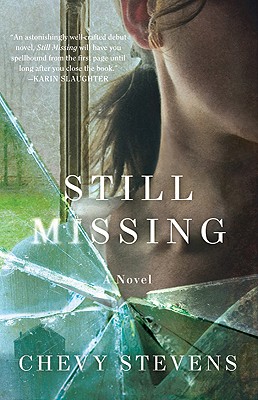
Still Missing

by Heather
You know when you pick up a book thinking that you want to read it, but something about it makes you keep pushing it to the bottom of the pile? That’s how I felt about Still Missing, a debut novel by Chevy Stevens. Centered around a kidnapping victim and detailing her capture, imprisonment, escape, and ongoing recovery, Still Missing promised to expose those dark horrifying elements that so often appeal to me, but for some reason (probably the thought of reading about something that is all too relevant in today’s times) I just couldn’t bring myself to delve into it. This is very unlike me. Usually, the darker the better, I mean who else raves about the beauty of Gillian Flynn’s prose as her character Camille cuts majestic, harsh, and haunting words into her own skin? Maybe there was something wrong with me, who knows, but a couple of months ago I finally got around to it and took it to bed with me. Not exactly the kind of book you snuggle up with, the imagery is apt to cause a distinct lack of sleep, but I did it anyway. And yes, I did lose sleep, but not for the reasons you think. The lack of sleep was directly related to the fact that I just did not want to stop reading.

Chevy Stevens manages to make a horrific subject matter digestible. Her character, Annie, shows a remarkable dark humor, which she uses to maneuver around a world that is no longer and might not ever be safe. While her captivity could be described in a visceral manner, it is not, rather she (Annie) is upfront with the reader (the book is written in first person as told to her psychiatrist) about her experience; her feelings after her abduction, how she survived mentally during it, and how she now stumbles through life, spending her nights sleeping in a closet in order to feel secure. She manages to convey a delightfully sarcastic, occasionally dark sense of humor that not only endears her to the reader, but also allows us to see how she managed to survive so long in such a horrendous situation, while maintaining most of her sanity. The true genius of this novel is that never was I so appalled that I had to put it down. The transitions between time periods are smooth, and although the acts of violence are described, never are they too detailed or too shocking. When dealing with this type of subject matter it is easy to get engrossed in the brutality, but Stevens manages to convey the acts, while not overwhelming the reader with the vicious details.

This was an engrossing read. It also possesses wit that engages, suspense that thrills, and a twist, which will rock readers. I highly recommend Still Missing to fans of Gillian Flynn, Chelsea Cain, and Lisa Unger, or for anyone who loves a good psychological thriller.

Tuesday, August 3, 2010

The Warwick's Questionnaire: Gary Shteyngart

The so-called Proust Questionnaire was originally a 19th-century parlor game designed to reveal bits of the soul, personality, & deep secrets of the participants through a series of pointed questions.  Marcel Proust was a big fan of the game and took the quiz several times during his lifetime - enthusiastically enough that the world has named the quiz after him.  Modern versions can be seen in the back pages of Vanity Fair (take the interactive quiz on vanityfair.com) and from James Lipton, host of Inside the Actor's Studio ("What is a sound you love?" etc.)  But nothing screams 19th-century parlor game like an independent bookstore in California, right?  So we've devised a ten question version of the Proust Questionnaire that we will be posing to the authors that visit the store.

Gary Shteyngart, author of the critically acclaimed novels The Russian Debutante's Handbook, Absurdistan, and the brand-new Super Sad True Love Story, was kind enough to be the very first participant in our debut version of the Warwick's Questionnaire - ten questions designed to reveal the dark reaches of an author's soul.  Or something like that.  Gary's answers mostly have to do with boiling water and Mark Twain. 

Gary Shteyngart, willing participant
1. What do you consider your greatest achievement?
  • Turning 38 without learning how to drive or boil water.
2. What is your greatest fear?
  • Dying in a car crash or being horribly burned by boiling water.
3. If you were a superhero, what would your power be?
  • The power to drive while using a tea kettle.
4. If you could bring one writer back from the dead, who would it be?
  • Mark Twain.  Duh.
5. What is your most treasured possession?
  • A Stalin-era copy of Tom Sawyer in Russian.
6. What do you dislike the most about your appearance?
  • The stuff below the neck.  The head's not great either.
7. What are you most looking forward to seeing on your tour stop in San Diego?
  • The Pacific Ocean. I've heard good things!
8. Was James Franco your prettiest student? (Actor Franco was one of Gary's students in the Creative Writing MFA program at Columbia University.)
  • Columbia is known for its hot student bod. He blended in nicely.
9. If dachshunds didn't exist, what would be your favorite dog? (Gary owns a longhaired wiener dog.  Not a euphemism.)
  • If dachshunds didn't exist I wouldn't want to live either.  Who would make me smile?
10. What is your motto?
  • "Can you please boil some tea for me and then drive me to the airport?"
Gary Shteyngart will be at Warwick's on Wednesday, August 11th at 7:30pm to discuss and sign his new novel, Super Sad True Love Story.  Check out the book trailer:

Tuesday, July 27, 2010

Are You Seth? vol.11

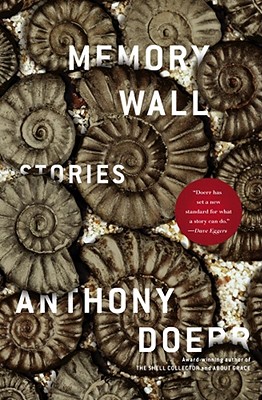
Today, in the 11th volume of AYS? I will be directing your attention to Anthony Doerr's new short story collection, Memory Wall.  I know, I know, nobody likes to read short stories anymore, but people, I'm here to tell you that you need to get over this phobia.  Short stories are the best way to discover new writers!  Where would we be without Chekhov, Poe, or O. Henry?  Most authors of quality start out writing short pieces before they can convince anyone to read their full-length novels.  Tobias Wolff, Jhumpa Lahiri, Robert Olen Butler, Ron Carlson, Alice Munro, Lorrie Moore, Wells Tower...embrace the short form!
"It's fair to say that Anthony Doerr is doing things with the short story that have rarely been attempted and seldom achieved."  -Dave Eggers
Doerr is also the author of one of my favorite novels from the past few years, About Grace.  (Still available for viewing on the Warwick's Bestsellers display.)  Sidebar: Grace is the story of one Henry Winkler who, throughout his life, experiences prescient dreams, usually of mundane, everyday occurrences that nevertheless come true every time.  Henry goes about his life, gets married, has a daughter, names her Grace.  One day, he has a dream that he is caught in a massive flood and has Grace swept from his arms by the torrent.  Naturally, this is a problem, as his dreams literally come true, so Henry decides that if he isn't around for the flood to sweep Grace away, it can never happen.  So he leaves his family behind in an attempt to save his daughter.  The rest of the book is about the circular path Henry's life takes, always trying to get back to his wife and child.  Heartbreaking, beautiful, great.

The title story from Memory Wall starts off with the Doerr's characteristic strength of prose and vivid descriptions of the natural world at large that instantly hooked me:
Seventy-four-year old Alma Konacheck lives in Vredehoek, a suburb above Cape Town: a place of warm rains, big-windowed lofts, and silent, predatory automobiles.  Behind her garden, Table Mountain rises huge, green, and corrugated; beyond her kitchen balcony, a thousand city lights wink and gutter behind sheets of fog like candleflames.
I always recommend reading the first page of anything you're interested in - if it grabs you right away, keep reading.  If not, move on.  Memory Wall is, as Mr. Doerr says "a collection of 4 stories, two novellas, all spiraling off the central idea of memory."  The two novellas - the bookends of the collection - are far and away the strongest of the bunch.  The title story is set in a sort of dystopian Cape Town, South Africa where the technology has been invented to retrieve memories from the brain and store them digitally for later re-visiting by the owners.  For example, Alma is an elderly woman who has the means to be able to afford such a luxury (it is almost prohibitively expensive) and as she is slowly succumbing to the ravages of memory loss and dementia, she can now access the memories of her life that she has lost.  Alma is vulnerable and dependant on others, and so open to the evil machinations of men.  When nefarious parties learn that Alma may have a memory stored away of a lucrative, secret event, she and her memories are exploited for financial gain and potential fame.  Is there enough of Alma still inside her own head to keep her memories safe?

The other novella, Afterworld, reminded me quite a bit of another contemporary of Doerr's, Kevin Brockmeier and his novel The Brief History of the Dead.  In Brockmeier's novel, when we die, we pass over to a massive city, where we wait, living rather normal lives, until there are no more people left on the planet with a first hand memory of us.  Doerr's story is similar in that Esther, raised in a German Jewish orphanage during WWII, is the sole survivor of the group of young girls who were living in the orphanage when all were sent to concentration camps  by the Nazis.  Now an elderly woman, she slips in and out of our world and the next, where her childhood friends await, ready to move to the next, final world.  For Esther, the memories flood her mind and she floats through the diaphanous, fragile barrier that exists between these multiple worlds, only to return to reality, as her corporal body is not yet ready to depart.  Sad, but a beautifully wrought & powerful story.

Among the other stories, Village 113 - about the building of China's Three Rivers Dam and the ancient community uprooted by its construction - won a prestigious O. Henry Prize in 2008 (his third win) and The River Nemunas - a young, orphaned girl moves from Kansas to Lithuania to live with her grandfather - just recently won a 2011 Pushcart Prize.  So, other people think these are pretty good too, just in case you didn't want to take my word for it.

Don't dismiss a book just because it is a collection of short stories - you may be missing out on a fantastic new author that could expand your reading horizons to levels you never thought possible.  Dip in, read one or two, put it down, read something else, loan it to your friend, come back to it later - they're not going anywhere.

Visit anthonydoerr.com for more - you can also read some of his stories as well as a few of his fantastic nonfiction essays.  (My favorite is "Butterflies on a Wheel" from 2008's Granta 102.)

Wednesday, July 14, 2010

The Arts & Culture Forum Roundup

On Friday, July 9th, Warwick's hosted a community Arts and Culture Forum to discuss the future of print media and critical journalism in San Diego.  The series of layoffs at the Union-Tribune in the last several weeks - especially that of Bob Pincus, long-time art critic and Books editor - proved to be the catalyst for the forum and prompted many concerned citizens to turn out to hear what the panel had to say on the subject.  Moderated by local author & psychologist, Dr. Richard Farson, the panel for the forum featured five prominent figures in the San Diego arts, culture, and book scene:  Jeff Light, editor of the San Diego Union-Tribune, Robert Pincus, former art critic and books editor at the U-T, Hugh Davies, director of the Museum of Contemporary Art San Diego, Sandra Dijkstra, founder & president of Dijkstra Literary Agency, and Angela Carone, Arts & Culture Producer at KPBS.  Each panel member was given the opportunity to address the following question posed by Dr. Farson:  What can we do, as a community, to ensure that the Arts, Culture, and Books are well represented in San Diego?

The issue seems to be twofold: one portion of the panel (and the audience) wants to see order restored, Bob Pincus returned to his desk at the U-T, and a continuation of fulltime arts coverage in the daily paper.  This sentiment was echoed by Sandy Dijkstra, Hugh Davies, and Bob Pincus especially.  Generally, this portion of the panel were strong proponents of print media maintaining a firm place in the community, rather than having more of a web-based critical presence.  Hugh Davies: "The prospect of having the anarchy of a blog determining what is great art and what is hype is very troublesome."  Angela Carone  (and, to some degree, Jeff Light) was more of the mind that online critical journalism needs to be embraced as a viable source of information.  "I think the future of arts journalism is online. The time for San Diego to strike is now."

Where do you stand, San Diego?  Is there a place for online arts criticism?  Or should we make every attempt to maintain the print media version?  As Sandy Dijkstra opined, San Diego is "either in or we're out" of the arts conversation.  Weigh in with your thoughts in the comments field of this post - we'd love to hear what you have to say.

The full video of the forum can be seen on the Warwick's Facebook page, in 20 minute installments.

For more info on the issue, check out some of the following resources:

Monday, July 12, 2010

Free Coffee! New Books! Discounts!

It's that time again - time for me to pressure you into skipping work for an hour or so on a Tuesday morning so you can listen to me talk!  Tomorrow - Tuesday, July 13th - at 10:00am, is the latest edition of Coffee with a Bookseller at Warwick's, where everyone who shows up will receive:
  • Free Coffee!
  • Free Scones from Brick & Bell Cafe!
  • A 20% Discount on All Books Discussed!
  • An Intimate Knowledge of the Newest and Best Books Available!
  • Personal Interaction with a LIVE Bookseller!
Join me for an odyssey of unparalleled dimensions as I take you down the rabbit hole to where this week's best books reside!  Anthony Doerr, James Lee Burke, Don Winslow, Alexander McCall Smith, Ayelet Waldman, and many more!  10:00am!  Tuesday!


UPDATE!  Best crowd ever for a Coffee with a Bookseller - thanks for coming out, everybody!  In case you missed it, here's the list of books I discussed (for the most part):
  • The Thousand Autumns of Jacob De Zoet by David Mitchell
  • Memory Wall by Anthony Doerr
  • The Glass Rainbow by James Lee Burke
  • Corduroy Mansions by Alexander McCall Smith
  • Rules of Betrayal by Christopher Reich
  • Faithful Place by Tana French
  • Savages by Don Winslow
  • Invisible by Paul Auster
  • Between the Assassinations by Aravind Adiga