Happy Banned Books Week! The First Amendment to the U. S. Constitution guarantees us freedom of speech, yet every year a large number of books are challenged in court and removed from libraries and schools, limiting the access that readers - especially young readers - have to them, restricting our basic rights of freedom. Removing books from public access is essentially a direct assault on a person's ability to choose what they read. This is where Banned Books Week comes in - BBW is an annual celebration of the freedom to read. In a salute to BBW, we will have a sharp-looking display of banned books at the store and, right here, a few of the Warwick’s staff have selected some of our favorite challenged books from the last decade or so, telling you why we love them and why they not only should never be banned, but should be READ!
John
To Kill a Mockingbird by Harper Lee
"Would any serious reader question the place of To Kill a Mockingbird among the great works of American literature? A compelling story with deeply affecting characters, the novel draws you fully into a world charged with issues central to the American experience: the interplay of race and class, the death of innocence, law and order, gender and family. This amazing novel has been challenged repeatedly, in schools and libraries, for its use of racial epithets, for its use at times of vulgar language, and its frank portrayal of rape. I would argue that these challenges point exactly to why this novel is so important - it is honest, true-to-life and our history, and still able to arouse powerful, indeed, visceral responses."
James
Huckleberry Finn by Mark Twain
"Twain captures the humor and contradictory morals of the pre-Civil War Antebellum South. Banning this book for racism misses the whole point he was trying to make with his satire. Every time I read it, I find something new to consider."
Janet
In Cold Blood by Truman Capote
"The banning of books in itself makes me sick at heart. When I scanned the lists of challenged books I was amazed to find In Cold Blood by Truman Capote. That book is a modern classic, a beautifully written true story of random violence in America, timely and important."
Julie
A Prayer for Owen Meany by John Irving
"From the master of characters, John Irving is at his best. Owen Meany will stay with you for the rest of your life! Anyone over the age of 15 should be able to handle this book. Banned? Really?"
Rob
The Glass Castle by Jeannette Walls
"Jeannette Walls proves that success and normalcy can come of and despite family dysfunction, an invaluable lesson in the current social climate. Not only should this book NOT be banned, it SHOULD be read by all."
Heather
Twilight series by Stephenie Meyer
"I’m always appalled when I see that a book has been banned. I mean the Bible, Diary of Anne Frank, even Mein Kampf, these are all part of history! So why did I pick the Twilight books? Well, they too are now a part of history or pop-culture at least, and whether or not you love or hate them, they are a strong part of our current culture. Besides how offensive can you get when the hero and heroine remain virgins until marriage and place such an importance on family? This series was actually banned because it was too racy and too sexual. Go figure."
Jim
Lolita by Vladimir Nabokov
"I can see why a book about steamy pedophilia would be banned. However, the writing is intoxicating, characters engaging, and the tale beautifully told. Humbert Humbert’s obsession for the young Delores is told by him, and the description of the madness that ensues is part of Nabokov’s greatness."
Seth
"I've given this a lot of thought - Catcher in the Rye, Harry Potter, The Chocolate War - those are easy, smart-looking picks for favorite banned books. In the Night Kitchen by Maurice Sendak has always been one of my favorite books that always surfaces on the list of those banned every year. Why all the hubbub? (This is a Caldecott Honor book, after all.) So the kid flashes the reader a little bit in the kitchen - no big deal. I'm always flabbergasted by schools and parents who challenge books like this - it's the adults, of course, who are uncomfortable with a little naked boy in a book, rather than the kids reading them. I know I didn't care when I was a kid reading this - I was too busy reading the awesome story. After all, isn't that what reading is all about? When I was looking over the handy list of the American Library Association's Most Frequently Challenged Books I also discovered that the most challenged book from 1990-1999 was Scary Stories to Tell in the Dark by Alvin Schwartz. Say what?! Banned for being too...scary? C'mon, people. Go out and read a banned book."
Friday, September 24, 2010
Thursday, September 23, 2010
The Warwick's Questionnaire: Nicholas Sparks
The so-called Proust Questionnaire was originally a 19th-century parlor game designed to reveal bits of the soul, personality, & deep secrets of the participants through a series of pointed questions. Versions of the quiz were re-popularized in the 20th-century by Vanity Fair and Inside the Actors Studio. Our version - The Warwick's Questionnaire - is a series of ten questions designed to plumb the depths of the souls of visiting authors.
Nicholas Sparks is the massively popular, bestselling author of sixteen novels (six of which have been made into blockbuster films), including the brand-new Safe Haven. He came by Warwick's on September 22nd to sign books for 300 of his biggest fans and he still found the time to answer our silly Questionnaire.
1. What do you consider your greatest achievement?
5. Who is your favorite hero of fiction?
6. What is your most treasured possession?
Nicholas Sparks is the massively popular, bestselling author of sixteen novels (six of which have been made into blockbuster films), including the brand-new Safe Haven. He came by Warwick's on September 22nd to sign books for 300 of his biggest fans and he still found the time to answer our silly Questionnaire.
1. What do you consider your greatest achievement?
- Helping my second son, Ryan learn to speak.
- Disappointing those I love.
- Incredible luck.
5. Who is your favorite hero of fiction?
6. What is your most treasured possession?
- My photo albums.
- Stephen Hawking - for his mind.
- I'd manage a global-macro hedge fund.
- My relatives.
- Live well, but buy a lot of insurance.
Friday, September 17, 2010
Coffee For the People!
Just in case you needed more reasons to get down to Warwick's on the second Tuesday morning of every month for Coffee with a Bookseller, our program got some great coverage this week in the widely-read book industry rags Bookselling This Week and Shelfawareness. Don't be the last one on your block! Get on down here next month! (October 12) The article:
Coffee With a Bookseller at Warwick’s
By Karen Schechner, for Bookselling This Week, on Wednesday, Sep 15, 2010
On the second Tuesday morning of every month, Warwick’s, in La Jolla, California, hosts “Coffee With a Bookseller.” The store serves free coffee and scones, and staff member Seth Marko leads customers on a “casual, informal journey” through new releases and Warwick’s staff picks.
Seth's actual coffee in Hvar, Croatia
“It can be a great way to connect with your reading community,” said Marko. “People love that it's informal, and I usually field a barrage of questions on how the book industry works, which is always fun to talk about. I love to point out to people that you don't get ‘Coffee With a Bookseller’ from Amazon or Barnes & Noble! It gets people thinking and keeps them shopping local.”
The 10:00 a.m. event has grown from a couple of attendees, when it first started in January, to about a dozen, “which is pretty much perfect,” said Marko. “It gets more and more popular every month as word gets around. People really enjoy the ‘insiders’ look at what's new, so when they come to one Coffee, they almost always come back the next month.”
Attendees receive 20 percent off any of the six to 12 titles typically discussed. Books mentioned at August's edition included: Super Sad True Love Story by Gary Shteyngart, I Curse the River of Time by Per Petterson, Star Island by Carl Hiaasen, and The Vanishing of Katharina Linden by Helen Grant.
Warwick’s is considering expanding the series. Marko said, “We've discussed a nonfiction branch with John Hughes, another of our booksellers.” For the holidays, the store is considering hosting a gift book/cookbook version.
Customers have a good time, and they buy books. “People love a discount, so when you couple that with a passionate bookseller in your ear, it usually translates to decent sales figures,” said Marko. “Last month I mentioned the paperback release of Everything Matters! by Ron Currie, Jr. and told everybody that it was my favorite book from 2009. We did quite well with that one that day.”
For the bookseller, it’s an ideal sales scenario – the customer is seated (Note: No seats! We stand!) and caffeinated. “Anytime I get to just talk about books I've read and enjoyed with a relatively captive audience is a lot of fun,” said Marko. “The best part of being a bookseller is getting the chance to tell someone about the books you love, right? What better way to do that than over a cuppa joe and a scone?”
Wednesday, September 8, 2010
The Warwick's Questionnaire: Christopher McDougall
The so-called Proust Questionnaire was originally a 19th-century parlor game designed to reveal bits of the soul, personality, & deep secrets of the participants through a series of pointed questions. Versions of the quiz were re-popularized in the 20th-century by Vanity Fair and Inside the Actors Studio. Our version - The Warwick's Questionnaire - is a series of ten questions designed to plumb the depths of the souls of visiting authors.
Christopher McDougall is a journalist and the author of Born to Run: A Hidden Tribe, Super Athletes, and the Greatest Race the World Has Never Seen about the barefoot-running, super-healthy Tarahumara Indians in Mexico. In between working on his next book, he runs "in bare feet among the Amish farms in rural Pennsylvania," where he lives with his family.
1. What do you consider your greatest achievement?
- Luck isn't really an achievement, but I'll claim it on a technicality. I have a knee-jerk instinct to say "Sure!" any time I'm offered work, only realizing later that maybe there are smarter ways to earn a buck than mucking blindly about in canyons or the Congo.
![]() |
| You can't run from the Warwick's Questionnaire. |
- That I could be wrong about Answer #3.
3. If you were a superhero, what would your power be?
- "If"?
- Give me just enough of Nelson Algren to splice with Emil Zatopek to create the coolest, toughest, cleverest bad-ass to ever walk the planet. Unless Johnny Cash makes it back first.
- I've got to steal this one from Geronimo: "I only trust my legs. They're my only friends." Everything good that has happened in my life has come from strolling, skulking or flat-out running into places I had no right being.
- C'mon, what answer is there besides the Prez?
- Have you ever heard of Statement Analysis? I came across a blog recently of a guy whose job is to analyze transcripts of criminal suspects. Super fascinating. Kept me up till 4am reading about odd little tells in the Amanda Knox and Madeleine McCann cases. "Guilty people have a difficult time saying four words," was one of the insights." And here they are: 'I didn't do it.' They'll embellish it, avoid it, try to persuade you that they're 'not the kind of person who could ever do something like that.' But 75% percent or more of guilty people will never say those simple words in their testimony." So yeah, sign me up for Statement Analysis 101 if this gig bottoms out.
- TBD. Ever since I got rid of those Burmese Tiger Traps known as cushioned running shoes, I've stopped getting injured. I'm running farther, better and more consistently than I ever dreamed possible, so really, the only limits on distance are time and desire.
- An old friend from Philly, Jennifer Silverman.
- Once you BS your way into the job, you'll figure out how to do it.
Thursday, September 2, 2010
A Book Lover's Manifesto
by Adrian Newell, Warwick's Book Buyer
Recently, a local school district announced a major change in their school curriculum - the removal of classic literature as required reading because "classics," according to this district, have been deemed to be irrelevant. School curriculum will instead focus on math and sciences. Such a change in emphasis will most likely result in a negative effect rather than a positive one as reading comprehension has been proven to improve test scores as well as lay a good foundation for academic achievement in college.
This announcement triggered a heated discussion in my office regarding the negative side effects/fallout that such a shortsighted approach will produce…this took me down a mental “rabbit hole”, which brings me to the point of this, my first ever blog entry...and, no, the irony is not lost on me!
There has been a lot of chatter these past few years regarding e-books, digital content and platforms, which has led to the inevitable prediction of the demise of the printed book. Despite all this chatter it’s safe to say that no one was truly prepared for the exponential growth in e-book adoption as evidenced in this past year. Everywhere you turn there are articles etc covering this topic and the book industry has not been unaffected by this constant barrage of negative press regarding the future of the physical book. Physical books are already being relegated to the ranks of obsolescence and possible extinction. When self-professed book lovers and supposed supporters of independent bookstores (most notably Sven Birkerts in a recent WSJ article) agree can the end be far off?
It is not - unless book lovers unite to stem the tide of this potentially self-fulfilling prophecy. As long as we stand by, fail to speak out and remind/educate consumers as to what we stand to lose, we may witness a loss that will be devastating to the cultural and intellectual fabric of our society.
I grew up without a TV or phone. My parents were depression era babies and quite frugal in their approach to consumerism but books were always an important constant in our lives. We went to the library every week for a new batch of reading materials. They also took the time to read aloud to us daily. A favorite memory (and only good one!) from school was my 6th grade teacher who read The Hobbit aloud to us every day. The only effective way to get everyone to behave was the threat of not reading if someone misbehaved. This only happened once, after which the severe peer disapproval leveled at the miscreants was enough to keep everyone in line.
I credit my lifelong reading habits and exposure to the ideas discovered on the pages of books as my truest and best education.
At this point I feel the need to declare that I am not a Luddite...well perhaps a wee bit...I love the ease that certain technology has brought to everyday life. However, I view technology as a means to an end, not the end itself. I own an iPod, an iPhone, a computer, but at no point will these devices ever replace the satisfaction and joy of holding and reading a physical book. When I look at the books on my bookshelves I can clearly recall many happy moments spent reading as well as what was going on in my life at the time of reading specific books. They are a visual history of my life and looking at them evokes memories of people, places, and experiences that would be lost if my library consisted of only books downloaded to an e-reader.
Additionally, the literary life has put me in contact with many wonderful people who have enriched my life. Technology can be good, but also serves as a barrier to truly connecting with people. We are losing the art of conversation, letter writing, journal keeping etc...always connected but never truly connecting at more than a superficial level. Texting, tweeting, and emailing cannot adequately replace face-to-face conversation where you can look the person in the eye and watch their facial expressions mirror their thoughts and emotions. Nuance is lost in cyberspace and emoticons are a poor substitute for the real thing.
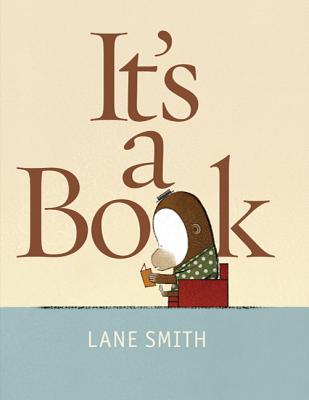
Recently I gave a shout out to It’s a Book by Lane Smith as my favorite book of the year. Why, you might ask, would I pick a children’s book above all the other deserving, finely written books of the past year?! Here’s why - he succinctly captures, with few words and charming illustrations, the current struggle between technology and the printed word. This is a book every book lover should read and share with others. (Check out his interview with the Wall Street Journal.)
So... my challenge to you is this. Just as we’ve seen a burgeoning “slow food” movement address the encroachment that fast food, processed food etc. has had on the culinary arts, I’d like to propose a “slow books” movement to encourage book lovers to go out and remind those around us of the importance and necessity of physical books. This is my call to arms and revolution, if necessary, to preserve something precious and vital to our culture.
Be retro, take a vacation from technology and unplug for a day...and use that day to reconnect with friends, explore the outdoors, or read a book. Most of all, speak out about this issue. Let’s not stand by doing nothing until it’s too late.
Be vocal, be proactive!
So spread the word, spread the love and give someone you care about a physical book this holiday season. It’s still the best entertainment value out there and time spent reading is never wasted!
Check out the following links to articles of interest on this topic.
http://news.bookweb.org/news/media-shines-spotlight-good-news-indie-bookstores
http://www.ebookskeptic.net/
http://www.regulatorbookshop.blogspot.com/
Tuesday, August 31, 2010
An Evening with the Warwick's Booksellers
This summary is not available. Please
click here to view the post.
Monday, August 30, 2010
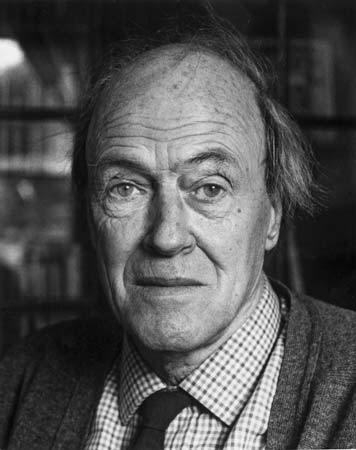
It's Roald Dahl Month!
In celebration of Roald Dahl month (his birthday would have fallen on September 13th) and the upcoming release of The Missing Golden Ticket and Other Splendiferous Secrets (the missing chapter from Charlie and the Chocolate Factory), Mr. Dahl will be the featured author in the Children’s Book Department at Warwick's for the month of September. Along with a special in-store display of Dahl’s books, we will also have a variety of Roald Dahl inspired giveaways for our young customers!
Dahl is an extraordinary author whose work has in some way touched, entertained, or in some cases frightened, us all (let’s face it, The Witches is pretty scary.) Whether drawn to his work after having seen one of the many films adapted from his stories, or having picked up one of his books as a child, the works of Roald Dahl have managed to influence the imaginations of readers for decades. Whether we've been drawn to the honesty of his autobiography Boy or sucked into the fantasy of James and the Giant Peach, we all manage to find something that calls to us in Dahl’s words.
We recently polled our the booksellers with the question “What’s your favorite Roald Dahl work, which did you or do you still pick up to read over and over again?” The abundance of written works by Dahl (numbering well into the 60’s according to roalddahl.com) makes it rather difficult to pinpoint a specific beloved story (it’s like having to pick your favorite all time movie without the benefit of segregating by genre), but when asked, it was surprising how quickly and diversely the Warwick’s staff replied. Here are their responses:
Emily: Matilda
John: Charlie and the Chocolate Factory
Seth: The Twits
Heather: Danny the Champion of the World
James: James and the Giant Peach
Scott: Fantastic Mr. Fox
Steven: The Witches
Jan: The BFG
Adrian: Tales of the Unexpected
Janet: George’s Marvelous Medicine
Susan: James and the Giant Peach
What are your favorite Roald Dahl books? Write in and let us know!
Dahl is an extraordinary author whose work has in some way touched, entertained, or in some cases frightened, us all (let’s face it, The Witches is pretty scary.) Whether drawn to his work after having seen one of the many films adapted from his stories, or having picked up one of his books as a child, the works of Roald Dahl have managed to influence the imaginations of readers for decades. Whether we've been drawn to the honesty of his autobiography Boy or sucked into the fantasy of James and the Giant Peach, we all manage to find something that calls to us in Dahl’s words.
We recently polled our the booksellers with the question “What’s your favorite Roald Dahl work, which did you or do you still pick up to read over and over again?” The abundance of written works by Dahl (numbering well into the 60’s according to roalddahl.com) makes it rather difficult to pinpoint a specific beloved story (it’s like having to pick your favorite all time movie without the benefit of segregating by genre), but when asked, it was surprising how quickly and diversely the Warwick’s staff replied. Here are their responses:
Emily: Matilda
John: Charlie and the Chocolate Factory
Seth: The Twits
Heather: Danny the Champion of the World
James: James and the Giant Peach
Scott: Fantastic Mr. Fox
Adriana: Charlie and the Chocolate Factory
Adrian: Tales of the Unexpected
Janet: George’s Marvelous Medicine
Susan: James and the Giant Peach
What are your favorite Roald Dahl books? Write in and let us know!
Monday, August 23, 2010
The Warwick's Questionnaire: Melanie Rehak
The so-called Proust Questionnaire was originally a 19th-century parlor game designed to reveal bits of the soul, personality, & deep secrets of the participants through a series of pointed questions. Versions of the quiz were re-popularized in the 20th-century by Vanity Fair and Inside the Actors Studio. Our version - The Warwick's Questionnaire - is a series of ten questions designed to plumb the depths of the souls of visiting authors.
Melanie Rehak is the author of the brand-new Eating For Beginners: An Education in the Pleasures of Food From Chefs, Farmers, and One Picky Kid. Her previous book, Girl Sleuth, was the recipient of two prestigious mystery awards, the Edgar (for Best Critical/Biographical Work) and the Agatha (for Best Nonfiction.) She also writes the food column Paper Palate for Bookforum.com and passionately hates celery.
1. What do you consider your greatest achievement?
- Right now? That I got on a plane with a two and a half week old baby and flew cross-country just because my older son is so obsessed with surfing I didn’t want him to miss out this summer. Usually? That I now know what to do with delicata squash and all that zucchini they always have at the farmer’s market.
- That I’ll realize I don’t actually like zucchini. Or that I won’t be able to think of any more books to write and I’ll be out of a career since writing is pretty much the only thing I’m good at.
- The ability to make people forget that Facebook and Twitter exist for at least three to four hours every day.
- A late 19th-century watch that belonged to my grandfather and then my father.
6. What do you dislike the most about your appearance?
- My eye bags (though I try to convince myself that eye bags are a writerly affliction to have, and at least they’re a far better one than being an alcoholic or a chain smoker)
- My older son in the ocean - it’s pure, unmitigated, contagious joy.
- Celery. Celery, celery, celery!
- Tea sandwiches made with local ingredients.
- "You’re not made of sugar; you won’t melt." My father always said this to me when it rained but I think it applies in any situation.
Wednesday, August 18, 2010
Gary Shteyngart: Super Sad, Super Funny
![]() |
| Gary Shteyngart and The Warwick's Staff Can't Stop Loving the Camera |
Still reading? Can't get enough of this event? You're in luck, as we also have the audio from Mr. Shteyngart's appearance conveniently squeezed into a reasonably sized mp3 file, which, for the purposes of branding we are calling The Warwick's Bookcast.
Powered by Podbean.com
We'll be posting regular podcasts in the future at this site: http://warwicksbooks.podbean.com/. In addition to audio from our author events, we hope to be adding author interviews, bookseller picks and other crazy content, so it might be worth adding to your podcast rotation. You can Subscribe to The Warwick's Bookcast using iTunes, or, if you don't use iTunes, our podbean page has several other ways of subscribing.
Monday, August 16, 2010
The Warwick's Questionnaire: David Herlihy
The so-called Proust Questionnaire was originally a 19th-century parlor game designed to reveal bits of the soul, personality, & deep secrets of the participants through a series of pointed questions. Versions of the quiz were re-popularized in the 20th-century by Vanity Fair and Inside the Actors Studio. Our version - The Warwick's Questionnaire - is a series of ten questions designed to plumb the depths of the souls of visiting authors.
Historian & Bostonian, David V. Herlihy is the author of Bicycle: The History and the brand-new, The Lost Cyclist: The Epic Tale of an American Adventurer and His Mysterious Disappearance. If Hitler had invented the bicycle, David may have had to rethink some of his answers in our Questionnaire.
![]() |
| David Herlihy, proud Cinelli owner |
1. What do you consider your greatest achievement?
- I’d say producing my latest book. Second was beating Mark Allen (the future six (sic) time ironman) in a 9th grade cross-country run.
- Not making an impact.
- Seeing through things.
- Maybe Edgar Allen Poe. He’d have a lot to reveal about the afterlife.
- I’d have to go with Pierre Lallement, the original bicycle patentee.
- Hitler.
![]() |
| Pierre Lallemont on his Velocipede |
7. What is your most treasured possession?
- Probably my red Cinelli, ca. 1985.
8. What do you dislike the most about your appearance?
- Right now it would have to be the extra pounds.
- The shoreline.
- Never give up.
Monday, August 9, 2010
The Warwick's Questionnaire: Elizabeth Brundage
The so-called Proust Questionnaire was originally a 19th-century parlor game designed to reveal bits of the soul, personality, & deep secrets of the participants through a series of pointed questions. Versions of the quiz was re-popularized in the 20th-century by Vanity Fair and Inside the Actors Studio. Our version - The Warwick's Questionnaire - is a series of ten questions designed to plumb the depths of the souls of visiting authors.
Elizabeth Brundage is the author of the novels The Doctor's Wife, Somebody Else's Daughter, and the brand-new A Stranger Like You. She is a graduate of the world-renowned creative writing MFA program at the University of Iowa (known as the Iowa Writers' Workshop.) She lives with her family in New York State, where she avoids the Empire State Building at all costs.
1. What do you consider your greatest achievement?
10. What is your motto?
Elizabeth Brundage is the author of the novels The Doctor's Wife, Somebody Else's Daughter, and the brand-new A Stranger Like You. She is a graduate of the world-renowned creative writing MFA program at the University of Iowa (known as the Iowa Writers' Workshop.) She lives with her family in New York State, where she avoids the Empire State Building at all costs.
1. What do you consider your greatest achievement?
- My kids of course!
- Falling off a skyscraper.
3. If you were a superhero, what would your power be?
- The ability to fly, become invisible, and speak every existing language fluently including dog, cat and horse.
4. If you could bring back one writer from the dead, who would it be?
- James Joyce.
- My corkscrew.
- My feet. Bunions the size of radishes.
- The Polar Bears at the San Diego zoo. I’m a bear fan.
- Gourmet chef! I’ll have to learn to cook first, though.
10. What is your motto?
- Lock and load.
Thursday, August 5, 2010
Warwick's Books Presents Don Winslow
| He Ain't Heavy, He's My Brother |
Signed copies of Savages, Winslow’s blazingly fast-paced crime noir of the SoCal/Mexican border drug trade, are still available for sale at Warwick’s.
Wednesday, August 4, 2010
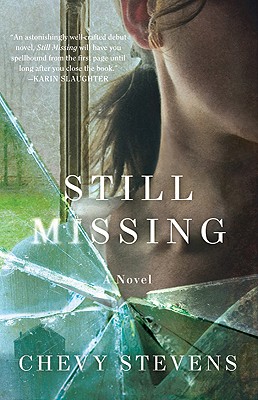
Still Missing
You know when you pick up a book thinking that you want to read it, but something about it makes you keep pushing it to the bottom of the pile? That’s how I felt about Still Missing, a debut novel by Chevy Stevens. Centered around a kidnapping victim and detailing her capture, imprisonment, escape, and ongoing recovery, Still Missing promised to expose those dark horrifying elements that so often appeal to me, but for some reason (probably the thought of reading about something that is all too relevant in today’s times) I just couldn’t bring myself to delve into it. This is very unlike me. Usually, the darker the better, I mean who else raves about the beauty of Gillian Flynn’s prose as her character Camille cuts majestic, harsh, and haunting words into her own skin? Maybe there was something wrong with me, who knows, but a couple of months ago I finally got around to it and took it to bed with me. Not exactly the kind of book you snuggle up with, the imagery is apt to cause a distinct lack of sleep, but I did it anyway. And yes, I did lose sleep, but not for the reasons you think. The lack of sleep was directly related to the fact that I just did not want to stop reading.
Chevy Stevens manages to make a horrific subject matter digestible. Her character, Annie, shows a remarkable dark humor, which she uses to maneuver around a world that is no longer and might not ever be safe. While her captivity could be described in a visceral manner, it is not, rather she (Annie) is upfront with the reader (the book is written in first person as told to her psychiatrist) about her experience; her feelings after her abduction, how she survived mentally during it, and how she now stumbles through life, spending her nights sleeping in a closet in order to feel secure. She manages to convey a delightfully sarcastic, occasionally dark sense of humor that not only endears her to the reader, but also allows us to see how she managed to survive so long in such a horrendous situation, while maintaining most of her sanity. The true genius of this novel is that never was I so appalled that I had to put it down. The transitions between time periods are smooth, and although the acts of violence are described, never are they too detailed or too shocking. When dealing with this type of subject matter it is easy to get engrossed in the brutality, but Stevens manages to convey the acts, while not overwhelming the reader with the vicious details.
This was an engrossing read. It also possesses wit that engages, suspense that thrills, and a twist, which will rock readers. I highly recommend Still Missing to fans of Gillian Flynn, Chelsea Cain, and Lisa Unger, or for anyone who loves a good psychological thriller.
Tuesday, August 3, 2010
The Warwick's Questionnaire: Gary Shteyngart
The so-called Proust Questionnaire was originally a 19th-century parlor game designed to reveal bits of the soul, personality, & deep secrets of the participants through a series of pointed questions. Marcel Proust was a big fan of the game and took the quiz several times during his lifetime - enthusiastically enough that the world has named the quiz after him. Modern versions can be seen in the back pages of Vanity Fair (take the interactive quiz on vanityfair.com) and from James Lipton, host of Inside the Actor's Studio ("What is a sound you love?" etc.) But nothing screams 19th-century parlor game like an independent bookstore in California, right? So we've devised a ten question version of the Proust Questionnaire that we will be posing to the authors that visit the store.
Gary Shteyngart, author of the critically acclaimed novels The Russian Debutante's Handbook, Absurdistan, and the brand-new Super Sad True Love Story, was kind enough to be the very first participant in our debut version of the Warwick's Questionnaire - ten questions designed to reveal the dark reaches of an author's soul. Or something like that. Gary's answers mostly have to do with boiling water and Mark Twain.
1. What do you consider your greatest achievement?
Gary Shteyngart, author of the critically acclaimed novels The Russian Debutante's Handbook, Absurdistan, and the brand-new Super Sad True Love Story, was kind enough to be the very first participant in our debut version of the Warwick's Questionnaire - ten questions designed to reveal the dark reaches of an author's soul. Or something like that. Gary's answers mostly have to do with boiling water and Mark Twain.
![]() |
| Gary Shteyngart, willing participant |
- Turning 38 without learning how to drive or boil water.
- Dying in a car crash or being horribly burned by boiling water.
- The power to drive while using a tea kettle.
- Mark Twain. Duh.
- A Stalin-era copy of Tom Sawyer in Russian.
- The stuff below the neck. The head's not great either.
- The Pacific Ocean. I've heard good things!
- Columbia is known for its hot student bod. He blended in nicely.
- If dachshunds didn't exist I wouldn't want to live either. Who would make me smile?
- "Can you please boil some tea for me and then drive me to the airport?"
Tuesday, July 27, 2010
Are You Seth? vol.11
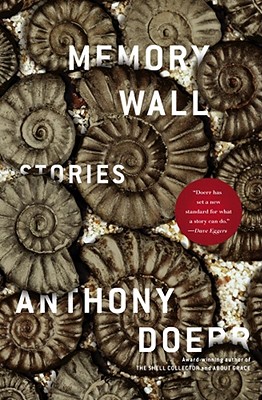
Today, in the 11th volume of AYS? I will be directing your attention to Anthony Doerr's new short story collection, Memory Wall. I know, I know, nobody likes to read short stories anymore, but people, I'm here to tell you that you need to get over this phobia. Short stories are the best way to discover new writers! Where would we be without Chekhov, Poe, or O. Henry? Most authors of quality start out writing short pieces before they can convince anyone to read their full-length novels. Tobias Wolff, Jhumpa Lahiri, Robert Olen Butler, Ron Carlson, Alice Munro, Lorrie Moore, Wells Tower...embrace the short form!
Doerr is also the author of one of my favorite novels from the past few years, About Grace. (Still available for viewing on the Warwick's Bestsellers display.) Sidebar: Grace is the story of one Henry Winkler who, throughout his life, experiences prescient dreams, usually of mundane, everyday occurrences that nevertheless come true every time. Henry goes about his life, gets married, has a daughter, names her Grace. One day, he has a dream that he is caught in a massive flood and has Grace swept from his arms by the torrent. Naturally, this is a problem, as his dreams literally come true, so Henry decides that if he isn't around for the flood to sweep Grace away, it can never happen. So he leaves his family behind in an attempt to save his daughter. The rest of the book is about the circular path Henry's life takes, always trying to get back to his wife and child. Heartbreaking, beautiful, great.
The title story from Memory Wall starts off with the Doerr's characteristic strength of prose and vivid descriptions of the natural world at large that instantly hooked me:
The other novella, Afterworld, reminded me quite a bit of another contemporary of Doerr's, Kevin Brockmeier and his novel The Brief History of the Dead. In Brockmeier's novel, when we die, we pass over to a massive city, where we wait, living rather normal lives, until there are no more people left on the planet with a first hand memory of us. Doerr's story is similar in that Esther, raised in a German Jewish orphanage during WWII, is the sole survivor of the group of young girls who were living in the orphanage when all were sent to concentration camps by the Nazis. Now an elderly woman, she slips in and out of our world and the next, where her childhood friends await, ready to move to the next, final world. For Esther, the memories flood her mind and she floats through the diaphanous, fragile barrier that exists between these multiple worlds, only to return to reality, as her corporal body is not yet ready to depart. Sad, but a beautifully wrought & powerful story.
Among the other stories, Village 113 - about the building of China's Three Rivers Dam and the ancient community uprooted by its construction - won a prestigious O. Henry Prize in 2008 (his third win) and The River Nemunas - a young, orphaned girl moves from Kansas to Lithuania to live with her grandfather - just recently won a 2011 Pushcart Prize. So, other people think these are pretty good too, just in case you didn't want to take my word for it.
Don't dismiss a book just because it is a collection of short stories - you may be missing out on a fantastic new author that could expand your reading horizons to levels you never thought possible. Dip in, read one or two, put it down, read something else, loan it to your friend, come back to it later - they're not going anywhere.
Visit anthonydoerr.com for more - you can also read some of his stories as well as a few of his fantastic nonfiction essays. (My favorite is "Butterflies on a Wheel" from 2008's Granta 102.)
"It's fair to say that Anthony Doerr is doing things with the short story that have rarely been attempted and seldom achieved." -Dave Eggers
Doerr is also the author of one of my favorite novels from the past few years, About Grace. (Still available for viewing on the Warwick's Bestsellers display.) Sidebar: Grace is the story of one Henry Winkler who, throughout his life, experiences prescient dreams, usually of mundane, everyday occurrences that nevertheless come true every time. Henry goes about his life, gets married, has a daughter, names her Grace. One day, he has a dream that he is caught in a massive flood and has Grace swept from his arms by the torrent. Naturally, this is a problem, as his dreams literally come true, so Henry decides that if he isn't around for the flood to sweep Grace away, it can never happen. So he leaves his family behind in an attempt to save his daughter. The rest of the book is about the circular path Henry's life takes, always trying to get back to his wife and child. Heartbreaking, beautiful, great.The title story from Memory Wall starts off with the Doerr's characteristic strength of prose and vivid descriptions of the natural world at large that instantly hooked me:
Seventy-four-year old Alma Konacheck lives in Vredehoek, a suburb above Cape Town: a place of warm rains, big-windowed lofts, and silent, predatory automobiles. Behind her garden, Table Mountain rises huge, green, and corrugated; beyond her kitchen balcony, a thousand city lights wink and gutter behind sheets of fog like candleflames.I always recommend reading the first page of anything you're interested in - if it grabs you right away, keep reading. If not, move on. Memory Wall is, as Mr. Doerr says "a collection of 4 stories, two novellas, all spiraling off the central idea of memory." The two novellas - the bookends of the collection - are far and away the strongest of the bunch. The title story is set in a sort of dystopian Cape Town, South Africa where the technology has been invented to retrieve memories from the brain and store them digitally for later re-visiting by the owners. For example, Alma is an elderly woman who has the means to be able to afford such a luxury (it is almost prohibitively expensive) and as she is slowly succumbing to the ravages of memory loss and dementia, she can now access the memories of her life that she has lost. Alma is vulnerable and dependant on others, and so open to the evil machinations of men. When nefarious parties learn that Alma may have a memory stored away of a lucrative, secret event, she and her memories are exploited for financial gain and potential fame. Is there enough of Alma still inside her own head to keep her memories safe?
The other novella, Afterworld, reminded me quite a bit of another contemporary of Doerr's, Kevin Brockmeier and his novel The Brief History of the Dead. In Brockmeier's novel, when we die, we pass over to a massive city, where we wait, living rather normal lives, until there are no more people left on the planet with a first hand memory of us. Doerr's story is similar in that Esther, raised in a German Jewish orphanage during WWII, is the sole survivor of the group of young girls who were living in the orphanage when all were sent to concentration camps by the Nazis. Now an elderly woman, she slips in and out of our world and the next, where her childhood friends await, ready to move to the next, final world. For Esther, the memories flood her mind and she floats through the diaphanous, fragile barrier that exists between these multiple worlds, only to return to reality, as her corporal body is not yet ready to depart. Sad, but a beautifully wrought & powerful story.
Among the other stories, Village 113 - about the building of China's Three Rivers Dam and the ancient community uprooted by its construction - won a prestigious O. Henry Prize in 2008 (his third win) and The River Nemunas - a young, orphaned girl moves from Kansas to Lithuania to live with her grandfather - just recently won a 2011 Pushcart Prize. So, other people think these are pretty good too, just in case you didn't want to take my word for it.
Don't dismiss a book just because it is a collection of short stories - you may be missing out on a fantastic new author that could expand your reading horizons to levels you never thought possible. Dip in, read one or two, put it down, read something else, loan it to your friend, come back to it later - they're not going anywhere.
Visit anthonydoerr.com for more - you can also read some of his stories as well as a few of his fantastic nonfiction essays. (My favorite is "Butterflies on a Wheel" from 2008's Granta 102.)
Wednesday, July 14, 2010
The Arts & Culture Forum Roundup
On Friday, July 9th, Warwick's hosted a community Arts and Culture Forum to discuss the future of print media and critical journalism in San Diego. The series of layoffs at the Union-Tribune in the last several weeks - especially that of Bob Pincus, long-time art critic and Books editor - proved to be the catalyst for the forum and prompted many concerned citizens to turn out to hear what the panel had to say on the subject. Moderated by local author & psychologist, Dr. Richard Farson, the panel for the forum featured five prominent figures in the San Diego arts, culture, and book scene: Jeff Light, editor of the San Diego Union-Tribune, Robert Pincus, former art critic and books editor at the U-T, Hugh Davies, director of the Museum of Contemporary Art San Diego, Sandra Dijkstra, founder & president of Dijkstra Literary Agency, and Angela Carone, Arts & Culture Producer at KPBS. Each panel member was given the opportunity to address the following question posed by Dr. Farson: What can we do, as a community, to ensure that the Arts, Culture, and Books are well represented in San Diego?
The issue seems to be twofold: one portion of the panel (and the audience) wants to see order restored, Bob Pincus returned to his desk at the U-T, and a continuation of fulltime arts coverage in the daily paper. This sentiment was echoed by Sandy Dijkstra, Hugh Davies, and Bob Pincus especially. Generally, this portion of the panel were strong proponents of print media maintaining a firm place in the community, rather than having more of a web-based critical presence. Hugh Davies: "The prospect of having the anarchy of a blog determining what is great art and what is hype is very troublesome." Angela Carone (and, to some degree, Jeff Light) was more of the mind that online critical journalism needs to be embraced as a viable source of information. "I think the future of arts journalism is online. The time for San Diego to strike is now."
Where do you stand, San Diego? Is there a place for online arts criticism? Or should we make every attempt to maintain the print media version? As Sandy Dijkstra opined, San Diego is "either in or we're out" of the arts conversation. Weigh in with your thoughts in the comments field of this post - we'd love to hear what you have to say.
The full video of the forum can be seen on the Warwick's Facebook page, in 20 minute installments.
For more info on the issue, check out some of the following resources:
- 2009 Arts & Culture Economic and Community Impact Report (from Dalouge Smith's "Dog Days" ArtsJournal blog)
- John Seed's piece on the Huffington Post
- Piece from the LA Times blog, Culture Monster
- OurTwitter feed from the event.
- The Reinstate Robert Pincus at the Union-Tribune Facebook page.
- The Campaign to Reinstate Bob Pincus blog.
Monday, July 12, 2010
Free Coffee! New Books! Discounts!
It's that time again - time for me to pressure you into skipping work for an hour or so on a Tuesday morning so you can listen to me talk! Tomorrow - Tuesday, July 13th - at 10:00am, is the latest edition of Coffee with a Bookseller at Warwick's, where everyone who shows up will receive:
UPDATE! Best crowd ever for a Coffee with a Bookseller - thanks for coming out, everybody! In case you missed it, here's the list of books I discussed (for the most part):
- Free Coffee!
- Free Scones from Brick & Bell Cafe!
- A 20% Discount on All Books Discussed!
- An Intimate Knowledge of the Newest and Best Books Available!
- Personal Interaction with a LIVE Bookseller!
UPDATE! Best crowd ever for a Coffee with a Bookseller - thanks for coming out, everybody! In case you missed it, here's the list of books I discussed (for the most part):
- The Thousand Autumns of Jacob De Zoet by David Mitchell
- Memory Wall by Anthony Doerr
- The Glass Rainbow by James Lee Burke
- Corduroy Mansions by Alexander McCall Smith
- Rules of Betrayal by Christopher Reich
- Faithful Place by Tana French
- Savages by Don Winslow
- Invisible by Paul Auster
- Between the Assassinations by Aravind Adiga
Wednesday, July 7, 2010
Just a Little Summer Reading
This time of year, everyone seems to have a Summer Reads list - much like the Best of the Year lists that emerge in December. Stephen King, writing for Entertainment Weekly, just announced his 6 Must-Reads For Summer (John Sandford, The Passage, Stieg Larsson...yawn); O Magazine has a huge list (including Aimee Bender, Brando Skyhorse, and Someone Knows My Name by Lawrence Hill); Time Magazine asked several writers for their picks, including Rebecca Skloot (Ted Conover's The Routes of Man - also one of my favorites), Charlaine Harris (61 Hours by Lee Child), and Alan Furst (Operation Mincemeat); NPR had a list from Indie booksellers as well. You get the idea. We here at Warwick's are entering the fray - here are the Summer Reads recommended by our booksellers - in brief:
Adriana: "Told through alternating view points, The Heights by Peter Hedges (author of What's Eating Gilbert Grape) is in turns surprising, insightful, funny, and will have you guessing right until the very end."
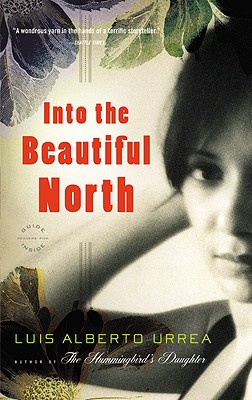
Janet: "Into the Beautiful North by Luis Alberto Urrea - a funny, timely novel set partly in San Diego, with a with strong women characters and a loose Seven Samurai theme."
Jim: "Island Beneath the Sea by Isabel Allende is a beautifully written historical novel about the Caribbean during the era of French Colonialism."
Heather: "Juliet by Anne Fortier is the story of Julie Jacobs, a young woman who is drawn into the mysterious and very real world of Shakespeare’s infamous warring families. This was a fast-paced, intriguing story with complex characters, and a clever plot. A very engaging read." (Due out August 24th.)
James: "Summer is a time for keeping things light and eating great food. Tarquin Hall's The Case of the Man Who Died Laughing is a curry flavored treat in the style of Alexander McCall Smith and Agatha Christie that will keep you hungering for more."
Rob: "Brady Udall's The Lonely Polygamist is a funny and original novel about a guy with lots of wives and even more issues."
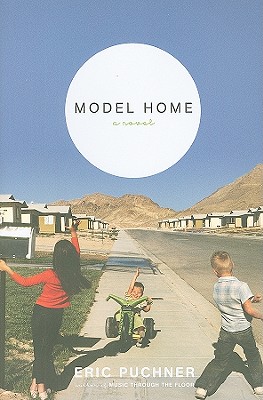
Joe: Model Home by Eric Puchner - a novel about the California experience of boom & bust, both hilarious & heartbreaking at the same time. I was laughing, crying, then really crying. Loved it.
Rhonda: "Crazy For the Storm by Norman Ollestad. Ollestad was only 11 years old in 1979 when he, his father, his father’s girlfriend, and the pilot flying their small charter plane crashed into a California mountain during a blizzard. Only Norman survived. How did this young boy survive such a disaster?"
Margie: "Furious Love by Sam Kashner and Nancy Schoenberger is one book you'll enjoy for sure. Richard Burton and Elizabeth Taylor have long been a fascination for many of us - they had a volatile relationship, for sure, but the were always very protective of each other and their families. It's wonderful to know just a little bit more about this fabulous couple."
Steven: "Drinky Crow's Maakies Treasury (or any Maakies collection, actually) by Tony Millionaire is the perfect nautically-themed adventure to read while sipping on a pint of rum and relfecting on the miseries of another long, hot summer."
John: "In K Blows Top: A Cold War Comic Interlude, Starring Nikita Khrushchev, America's Most Unlikely Tourist, Peter Carlson delivers a shocking, hilarious, and thoroughly entertaining account of Nikita Khrushchev’s 1959 trip across America. As funny as any novel I have ever read, this is a perfect beach read for any lover of history."
Seth: "What else could I pick for Summer Reading but my favorite author's new novel? David Mitchell's The Thousand Autumns of Jacob De Zoet is a majestic, sprawling historical epic of Japan and the encroaching West at the end of the 1700's. Mitchell's brilliant prose sweeps you along with the flow, always keeping you wondering, as foreigner like Jacob, how much of the lush, inner world of Japan you will be allowed to glimpse." See more in Are You Seth? vol 10.
Adriana: "Told through alternating view points, The Heights by Peter Hedges (author of What's Eating Gilbert Grape) is in turns surprising, insightful, funny, and will have you guessing right until the very end."
Jim: "Island Beneath the Sea by Isabel Allende is a beautifully written historical novel about the Caribbean during the era of French Colonialism."
Heather: "Juliet by Anne Fortier is the story of Julie Jacobs, a young woman who is drawn into the mysterious and very real world of Shakespeare’s infamous warring families. This was a fast-paced, intriguing story with complex characters, and a clever plot. A very engaging read." (Due out August 24th.)
James: "Summer is a time for keeping things light and eating great food. Tarquin Hall's The Case of the Man Who Died Laughing is a curry flavored treat in the style of Alexander McCall Smith and Agatha Christie that will keep you hungering for more."
Rob: "Brady Udall's The Lonely Polygamist is a funny and original novel about a guy with lots of wives and even more issues."
Joe: Model Home by Eric Puchner - a novel about the California experience of boom & bust, both hilarious & heartbreaking at the same time. I was laughing, crying, then really crying. Loved it.
Rhonda: "Crazy For the Storm by Norman Ollestad. Ollestad was only 11 years old in 1979 when he, his father, his father’s girlfriend, and the pilot flying their small charter plane crashed into a California mountain during a blizzard. Only Norman survived. How did this young boy survive such a disaster?"
Margie: "Furious Love by Sam Kashner and Nancy Schoenberger is one book you'll enjoy for sure. Richard Burton and Elizabeth Taylor have long been a fascination for many of us - they had a volatile relationship, for sure, but the were always very protective of each other and their families. It's wonderful to know just a little bit more about this fabulous couple."
Steven: "Drinky Crow's Maakies Treasury (or any Maakies collection, actually) by Tony Millionaire is the perfect nautically-themed adventure to read while sipping on a pint of rum and relfecting on the miseries of another long, hot summer."
John: "In K Blows Top: A Cold War Comic Interlude, Starring Nikita Khrushchev, America's Most Unlikely Tourist, Peter Carlson delivers a shocking, hilarious, and thoroughly entertaining account of Nikita Khrushchev’s 1959 trip across America. As funny as any novel I have ever read, this is a perfect beach read for any lover of history."
Seth: "What else could I pick for Summer Reading but my favorite author's new novel? David Mitchell's The Thousand Autumns of Jacob De Zoet is a majestic, sprawling historical epic of Japan and the encroaching West at the end of the 1700's. Mitchell's brilliant prose sweeps you along with the flow, always keeping you wondering, as foreigner like Jacob, how much of the lush, inner world of Japan you will be allowed to glimpse." See more in Are You Seth? vol 10.
Subscribe to:
Posts (Atom)